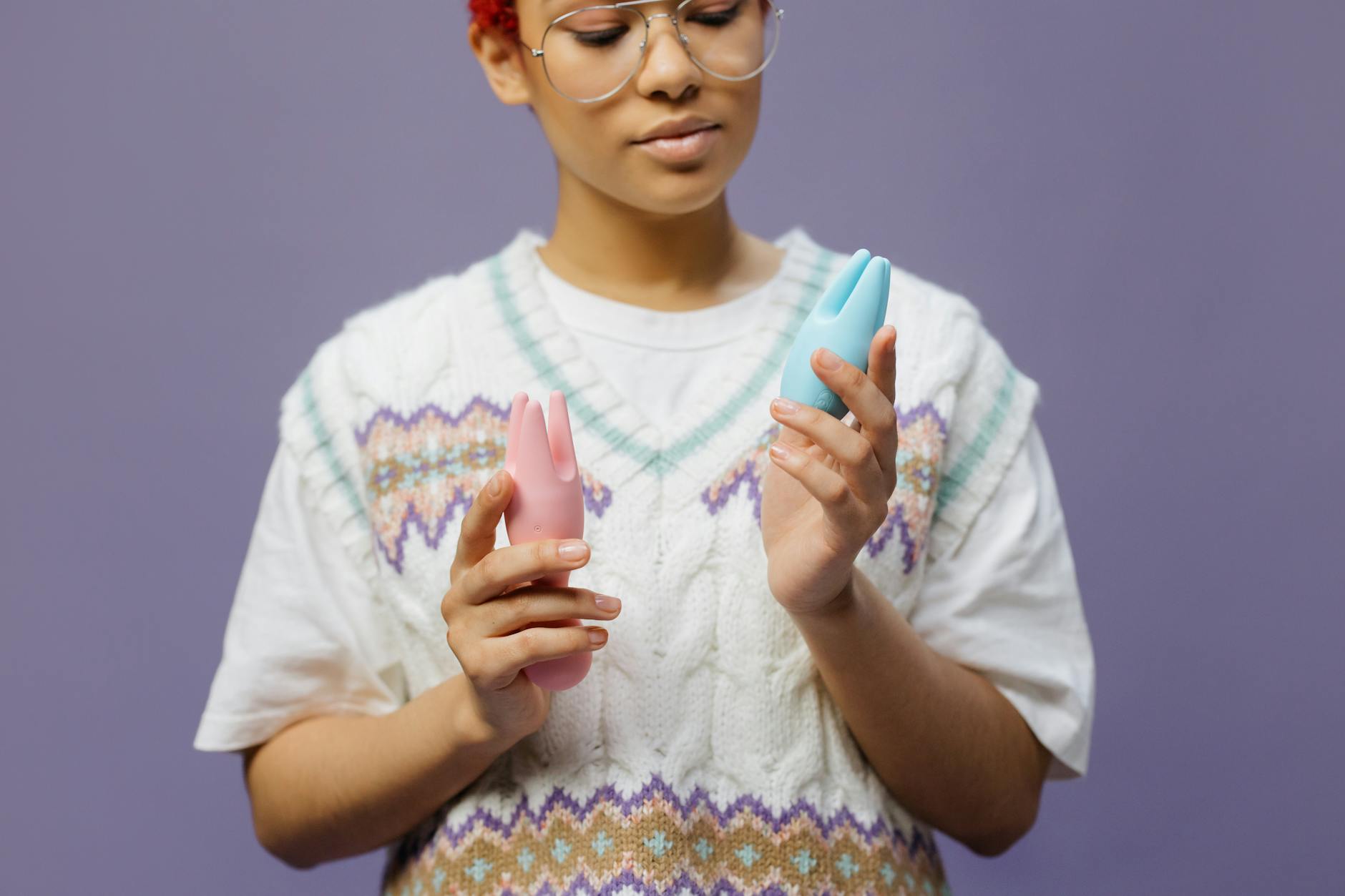
Let's start with the honest part
Most couples think bringing a toy into the bedroom is about fixing something broken. It's not. It's about deepening what already works.
When a lemon vibrator enters a relationship, it's not a replacement for your partner's touch. It's a third presence in the room that gives you both permission to explore differently. A clitoral vibrator like a lemon sucker changes the conversation from "Can you do this?" to "What does this feel like together?" That shift is where real intimacy happens.
The emotional setup matters more than the physical one
I've worked with hundreds of couples, and the ones who integrate a lemon sexual toy successfully don't start with logistics. They start with honesty.
Before you even bring a lemon vibrator into bed, you need two conversations. First, alone with yourself: What do you want from this? Are you trying to explore something new, or are you trying to reach an orgasm that's been elusive? Are you curious, or are you doing this because you think your partner wants it? Get clear on your own desires first. Your partner isn't a mind reader.
Second, with your partner: "I've been thinking about trying something new together." That's it. Simple. Then listen. They might be excited, nervous, curious, or skeptical. All of those are normal. The goal isn't agreement in that moment. It's understanding. You're learning what they're feeling, and they're learning that you're willing to talk about pleasure openly.
Most couples skip these conversations and jump straight to the toy. Then they blame the toy when it feels awkward. The lemon vibrator isn't awkward. The skipped conversation is.
Why shared pleasure feels different
When you're using a lemon vibrator with a partner, something shifts neurologically and emotionally. You're not performing for them. You're inviting them into an experience.
Here's what I see happen: One partner uses the vibrator while the other watches, touches, or simply stays present. The person with the toy often reports that having a partner witness their pleasure changes how the pleasure feels. It's less private, which paradoxically makes it more intimate. You're being seen in a vulnerable moment, and the fact that they're choosing to stay present, engaged, and interested tells you something about how they value you.
For the partner who's watching, it's an education. You learn what your partner's arousal actually looks like. You notice their breathing, the micro-expressions, what makes them pause and what makes them lean in. You gather data that feels more honest than anything you could ask.
The practical framework that actually works
Here's what I recommend to couples who are integrating a lemon clitoral vibrator for the first time:
Start slow and solo first
One person uses the lemon vibrator alone while the other is in another room. Not secretly. Just separately. This removes the pressure of performing or looking a certain way. You get to learn your own body's response without an audience. You figure out which settings feel good, how long arousal takes, what pace works. This takes maybe three sessions. Then you're ready to bring it together.
Create a specific container
Pick a time when you're both relaxed, not stressed, not exhausted. Not a quickie situation. Set aside 30-45 minutes. The actual pleasure part might take 15 minutes, but the conversation, the touch, the presence around it takes time. And that time is not wasted. It's the whole point.
Start with touch, not the toy
When you're together, don't go straight to the lemon vibrator. Spend 10-15 minutes with your hands, your mouth, whatever you normally do. The toy isn't meant to replace that. It's meant to build on it. By the time you introduce it, you're both already aroused and present.
One person guides the experience
The person receiving pleasure should be the one holding or controlling the vibrator at first. They know their body. They know what feels good. Your partner's job is to be present, to touch other parts of your body, to talk if that feels good, to simply be there. This isn't a performance. This is information gathering.
Talk during, not just after
Weirdly, people forget this. "Is this good?" "Do you like this setting?" "Should we try this angle?" These micro-conversations aren't mood-killing. They're intimacy-building. You're literally learning what makes each other feel good in real time.
What changes when you share pleasure
Couples who regularly use a lemon vibrator together often report that their overall sexual connection shifts. Not because the toy is magical. Because the toy gave them permission to be more curious, more direct, more honest.
One partner might discover that they prefer a different kind of stimulation than their partner assumed. Another might realize that what they like varies depending on their cycle, their stress level, their emotional connection that day. The toy becomes a vehicle for that discovery, not the point itself.
I've also noticed that couples who use a clitoral vibrator together report feeling less performance pressure overall. When you're not relying solely on manual stimulation or penetration, there's less anxiety about "taking too long" or "not being enough." The lemon sucker does what it does consistently. Your partner can focus on connection instead of technique.
When things feel awkward (and how to move through it)
First time using a lemon sexual toy with your partner will probably feel a little strange. That's completely normal. Shame and awkwardness thrive in silence, so here's what to do:
If it feels weird, say so. "This is awkward for me. I like you. I want to keep trying." That sentence contains everything. You're naming the feeling, affirming the relationship, and expressing commitment to exploration.
If the sensation doesn't work, stop and try something else. Maybe the angle is wrong. Maybe the setting is too high. Maybe you need more lubrication. Maybe you just need to take a break and come back to it next week. All of these are fine. Progress isn't linear. You're learning together.
If one partner feels left out or resentful, pause everything and talk about it. Maybe they need a turn. Maybe they need reassurance that the toy isn't a replacement for them. Maybe they need to understand why this matters to you. These are solvable problems, but they require honesty.
The long view
Integrating a lemon vibrator into your partnership isn't about instant results or performance metrics. It's about building trust around desire, curiosity, and vulnerability.
Over time, couples who use a clitoral vibrator together often report deeper emotional intimacy outside the bedroom too. When you've shown each other what turns you on, what makes you nervous, what brings you pleasure, you've revealed something essential. You've chosen to stay in that moment together instead of looking away.
The lemon vibrator is just the tool. The connection is the point. Your partner is there because they want to know you more deeply. They want to be part of your pleasure. They want you to feel good. That's worth honoring, and it's worth taking your time to explore it thoughtfully.
If you're considering bringing a toy into your relationship and you're not sure where to start, I recommend reading about how to use a lemon vibrator for the first time with a partner. That post walks through the conversation framework specifically.
You might also find how to use a lemon vibrator when partners have different orgasm goals helpful if you're noticing that you and your partner have different expectations around climax or pleasure.
People also ask
Can using a lemon vibrator together improve a struggling relationship?
A toy can't fix a broken relationship. If communication is poor, trust is damaged, or intimacy has completely disappeared, a vibrator won't repair that. What it can do is open a door for couples who already like each other but have gotten stuck in routine. It creates a reason to talk about desire, to be curious together, to try something new. If your relationship needs repair, start with honest conversation or couples therapy. Then, once the foundation is stronger, a lemon clitoral vibrator can become a fun tool for deepening connection.
How do I know if my partner will be into this?
You ask. Directly. "I've been thinking about exploring something together. Would you be open to trying a vibrator?" Some people will say yes immediately. Some will say no. Some will say maybe. None of those answers means anything about your relationship or your partner's attraction to you. They just mean people have different comfort levels. Respect whatever they say, and don't resent them for it. If this matters a lot to you and they're not open to it, that's a compatibility conversation worth having.
Is using a vibrator together cheating or unfaithful?
No. Using a lemon vibrator with your partner is the opposite of infidelity. It's shared pleasure within the relationship. If you're both choosing to be there together, both exploring, both present, that's intimacy. It's not cheating unless one partner feels betrayed or if there's been a breach of trust about it. That's why the conversation part matters so much.
What if one partner wants it and the other doesn't?
Then you have a mismatch in desire, which is a normal relationship challenge. It doesn't mean the person who wants a vibrator is broken or overly sexual. It doesn't mean the person who's hesitant is prudish or uninterested in pleasure. You're just different. The goal is to understand each other's hesitation or excitement and see if there's a compromise. Maybe the hesitant partner is willing to try once. Maybe the enthusiastic partner is willing to respect a no. These conversations are hard, but they're the ones that strengthen relationships.
Does using a lemon vibrator mean my partner isn't enough?
No. A lemon sucker is a tool that creates a different kind of sensation than a partner can provide with their body. Using a vibrator doesn't mean your partner is insufficient. It means you're expanding what you explore together. Many people find that toys enhance their partner connection because they free up the partner to focus on touch, connection, and presence instead of worrying about technique. The tool does one thing well. Your partner does everything else.
How often should couples use a vibrator together?
There's no normal. Some couples use a lemon sexual toy every time they have sex. Some use it once a month. Some buy one and try it three times and then it sits in a drawer for a year. All of these are fine. What matters is that you're both interested when you use it and that you stop when either of you wants to stop. It's not a requirement. It's an option. Treat it as playfully as you would a new position or setting.
What comes next
Building intimacy with a partner isn't about having the right tools. It's about showing up with curiosity, honesty, and patience. A lemon vibrator can be a wonderful part of that journey, but it's the conversation, the touch, and the willingness to be seen that actually matters.
If you're ready to explore this with your partner and you'd like some guidance on how to approach the first conversation, reach out to us at /contact. We're here to answer questions and help you feel more confident about taking this step together.