Let's talk about the thing you probably feel weird bringing up
You orgasm quickly. Maybe it's always been that way. Maybe it's new. Either way, there's this low hum of frustration because you want more time in the buildup, or you want your partner to feel like they got somewhere with you, or you want to know what a longer climax even feels like. Here's what I know from years of working with couples: fast orgasms are not a bug in the system. They're your nervous system responding exactly as it's wired to respond.
What changes is the approach. And often, that approach has everything to do with pacing and sustained stimulation rather than raw intensity.
Why some people orgasm quickly (and it's not what you think)
Quick orgasms usually come down to one of three things: habit, nerve sensitivity, or nervous system arousal patterns.
If you've spent years masturbating the same way, your body learns that pattern. The pathway fires fast. You're not broken. You're efficient. Your system has been trained to cross the finish line at a certain speed.
Nerve density also plays a role. People with highly sensitive clitoral tissue or a lower threshold for stimulation intensity can tip into orgasm faster. Again, not a problem. It's just biology.
The third piece is nervous system state. If you're tense, anxious, or in a heightened sympathetic state (fight-or-flight), your body can rush toward release as a way to discharge that tension. It's a quick exit from a state your nervous system wants to leave.
None of these require fixing. They require understanding.
Why the Lem changes the math for people who finish fast
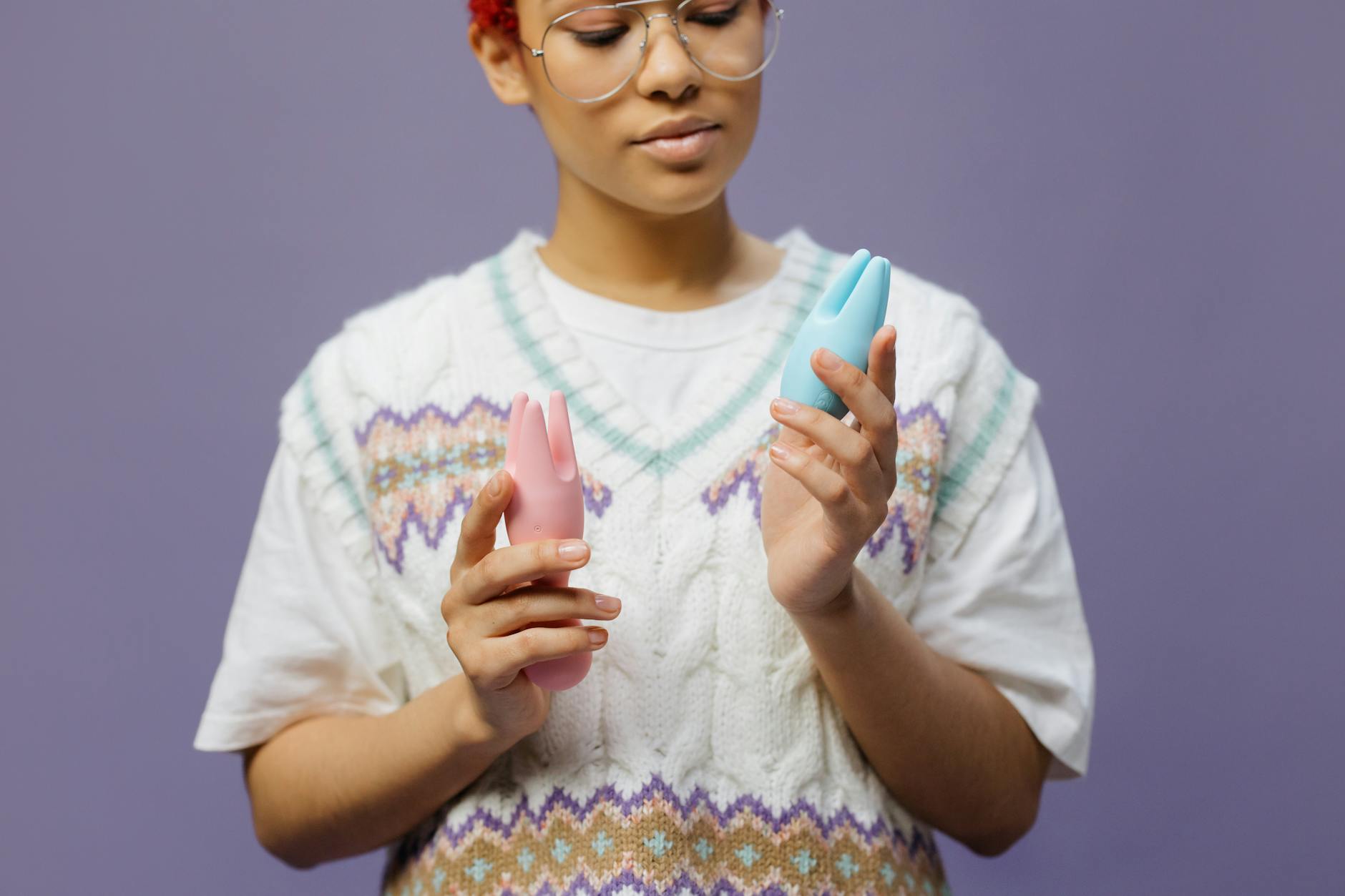
A lemon clitoral vibrator like the Lem works differently than other toys because it uses air-suction technology instead of direct vibration. Here's why that matters for extending pleasure.
With a traditional vibrator, you're chasing intensity. You press harder, speed up the frequency, keep escalating until you cross into orgasm. It's a linear line up. Fast.
With the Lem, the suction creates a rhythmic pull that engages deeper nerve tissue and builds sensation in layers. You can stay in the buildup much longer without tipping over. The sensation is sustained rather than pointed. That sustained quality is exactly what people who finish quickly are looking for.
I see this pattern consistently with my clients. The Lem gives you the ability to hover in the arousal phase for longer without the experience feeling like you're holding back or stopping yourself. The tool itself encourages the pace.
The pattern that extends your pleasure
Start on the lowest setting. This is not a speed test. This is about finding the sensation threshold where you feel good but aren't accelerating yet.
Stay there for 5-10 minutes. Most people who finish quickly skip this part. You're not skipping it. You're living in it.
Notice the sensations that show up. Warmth. Tingling. Waves. Pressure. Your attention is the other tool here. Attention slows time.
When you feel a natural deepening (not a spike, a deepening), move to the next pattern or intensity level. Then stay again. Build again. Move again.
The architecture is: baseline sensations, notice, deepen, build, notice, deepen, build. You're extending the runway. By the time you actually reach orgasm, you've been in heightened pleasure for 20 or 30 minutes instead of 3.
And the orgasm itself? It's often more textured because you gave your nervous system time to map the full bandwidth of sensation instead of rushing to the endpoint.
What changes when you extend the buildup
Most people report that longer buildups produce different orgasms. Shallower, yes. But also more full-body. More sustained. More recoverable from (you're not totally wiped after 90 seconds).
If you're with a partner, the extension also changes the relational experience. Your partner gets to participate in more of the journey instead of feeling like they arrived at the end already halfway done. Sex becomes something you're doing together for longer, not something that happens fast and then it's over.
Solo, the psychological shift is different. You're learning that pleasure isn't about the fastest route to orgasm. It's about the longest time spent in pleasure. That's a values shift that rewires how you approach your own body.
Many of my clients find that once they reprogram their arousal expectations, they don't want to go back to the fast version. The extended experience becomes the baseline.
Practical setup for success
Use lubricant. Even if you don't think you need it, the Lem works better with it, and it changes how the suction feels. Water-based is safest for silicone.
Set a timer for 20 minutes the first time you try this pattern. You're not trying to reach an endpoint. You're trying to stay present for the duration. When the timer goes off, you can continue or stop. The point is removing the pressure to perform.
Find a position where you can relax completely. Most people report better success lying on their back or side with good support under their head and neck. Tension anywhere else in your body will pull your nervous system out of the pleasure state.
If you're in a partnership, tell them what you're doing before you start. Not during. Before. "I'm going to use the Lem for about 20 minutes and I'm not going to rush into orgasm. I might need quiet space." Context changes expectations.
The conversation with yourself (or your partner)
If you've internalized shame about finishing quickly, this step matters. Somewhere along the way, you learned that this was a problem. It probably wasn't articulated directly. It was a comment. A comparison. A partner's surprise. And now your body carries that as a flaw.
It's not. Your body is working. The only thing that wasn't working was the framework you were using to measure it against.
When you shift to extending pleasure, you're not fixing a broken system. You're choosing a different experience. That distinction matters psychologically because one is about repair and the other is about exploration. Exploration feels way better.
If your partner has expressed frustration about your pace in the past, now is a good time to have a real conversation. Not defensive. "I've realized I want to explore pleasure differently. Would you be interested in that with me?" They get a choice. You get to model what it looks like when someone takes their own pleasure seriously.
When to bring a partner into this
Honestly, solo first. Learn your own rhythm without anyone else's timeline in the mix. Once you know how to build your own extended pleasure, bringing a partner in becomes about synchronizing, not about performing.
If you're rebuilding intimacy with a partner after a rough period, extending the buildup together can be incredibly restorative. You're literally slowing down time together. You're choosing presence over performance. That's relationship work disguised as a pleasure practice.
For partners who feel like sex is over too fast, inviting them into this process removes the shame spiral. You're not saying "I have a problem." You're saying "I want to go deeper with you. Will you come with me?" Different story. Better story.
FAQ: The questions people actually ask
Can the Lem really help if I've always finished quickly?
Yes, but not because the Lem is magic. It's because the Lem's design encourages a sustained approach instead of a chasing-intensity approach. The tool supports the pattern. Your commitment to staying in the buildup does the work.
What if I feel like I'm stopping myself or holding back?
That's different from extending pleasure. If you're white-knuckling through it, you're working against your body, not with it. The goal is to find intensities and patterns where your nervous system naturally wants to stay longer. If you're forcing it, the intensity or pattern is wrong. Go lower. Stay longer. Let pleasure build instead of racing.
Does this work with partners who also finish quickly?
Actually, yes, often better. Two people who both move fast can learn together to extend the buildup. You're modeling new behavior for each other. You're building new patterns as a team. That's often easier than one person retraining while the other waits.
What if I have numbness or low sensation and finishing quickly doesn't apply to me?
This pattern is specifically for people whose bodies are responsive and move quickly toward orgasm. If you have low sensation or numbness, read about better sensitivity when numbness interrupts pleasure. That's a different approach. The Lem works in both scenarios, but the pacing is different.
Should I use a lemon clitoral vibrator or a different toy for this?
The Lem is specifically designed for this. Air-suction technology gives you the sustained sensation without requiring you to keep escalating intensity. Other vibrators often push you into faster rhythms. The Lem lets you stay. That said, find what your body responds to. Some people find they can extend buildup with any tool once they commit to the pacing pattern.
Is it normal to feel frustrated when I'm trying to slow down?
Completely. Your nervous system has a learned response. You're asking it to take a different path. That feels weird at first. Give yourself three to five sessions before deciding if this works. Your body needs time to trust that slowing down doesn't mean stopping.
The real shift
Extending pleasure is about reclaiming what pleasure is supposed to be. Not a sprint. Not a performance. Not a measure of whether you're normal or not. It's time spent in sensation, deepening, building, noticing. You're learning your own architecture of arousal instead of fighting it.
That changes everything. Not just how orgasms feel, but what you think you deserve in terms of time, attention, and care in your own body. You deserve 20 minutes of pleasure, not three. You deserve to explore the full bandwidth of sensation. You deserve a tool that supports that, like the Lem, and a commitment to yourself that this matters.
Start small. Stay patient. Let your nervous system learn that slower builds something worth staying for.