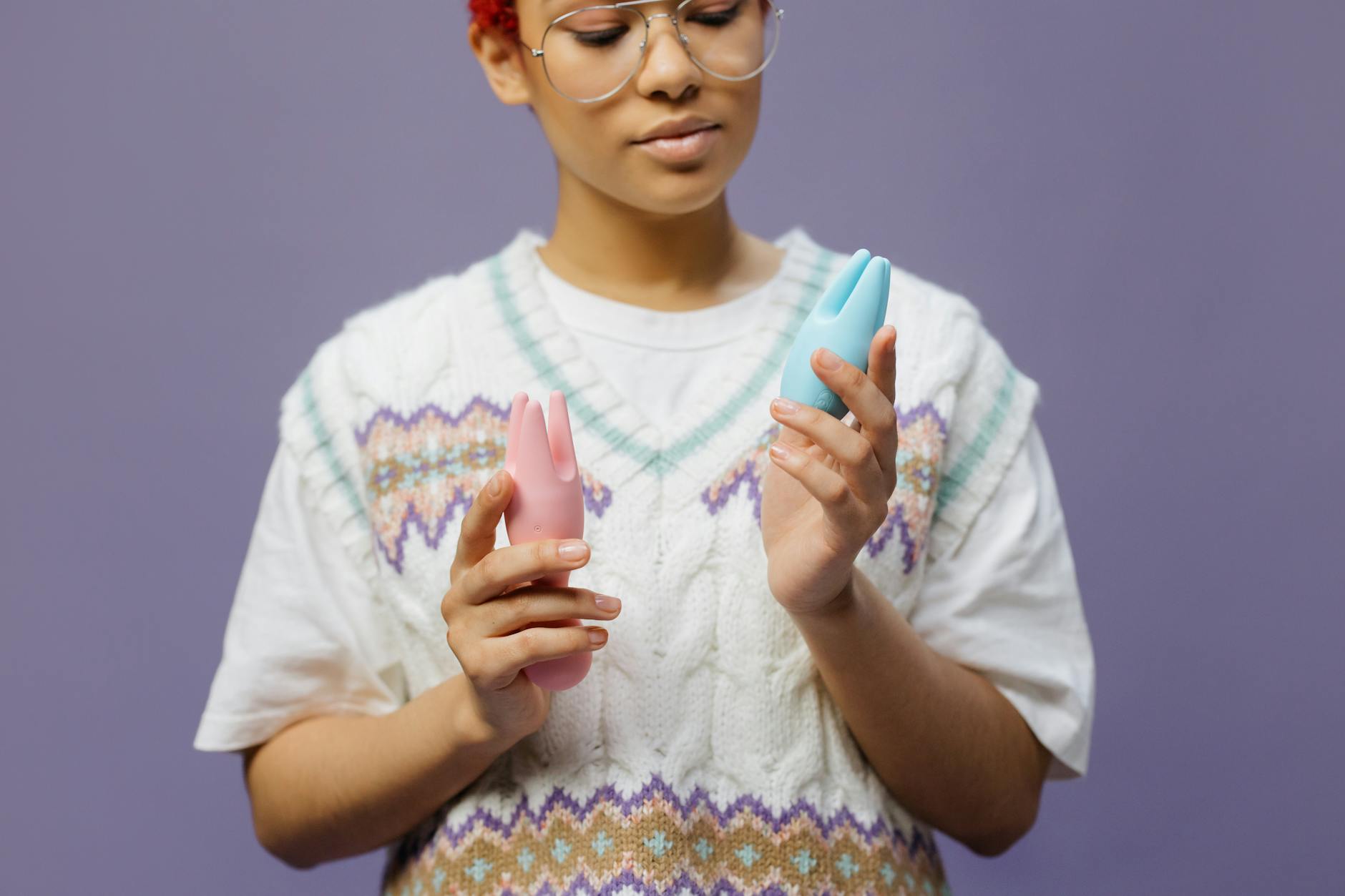
How to Use a Lemon Vibrator for Couples Rebuilding Intimacy After Life Stress
Let's be real. Stress is a libido assassin. Whether it's the weight of back-to-back work deadlines, parenting demands, caregiving responsibilities, or just the ambient chaos of modern life, most couples reach a point where sex stops happening. Not because they don't want each other. Because they're operating in survival mode and pleasure doesn't fit the schedule.
The good news: reconnection doesn't require a weekend away or a spontaneous second honeymoon. Sometimes it requires permission, a little novelty, and a tool that makes pleasure feel less like another performance and more like actual play. That's where a lemon clitoral vibrator comes in.
Why stress fractures intimacy
When you're stressed, your nervous system lives in threat mode. That's cortisol and adrenaline running the show. Sex requires your nervous system to shift into safety mode. It requires trust, presence, and the ability to drop out of your to-do list for 20 minutes. None of that happens when you're worried about the mortgage, the presentation, the pile of laundry, or your aging parent's doctor appointment.
Partners often interpret this shutdown as rejection. "They don't want me anymore." But usually it's just that their brain is literally too loud for pleasure to land. This is where the misconception creeps in. People think they need to fix the stress first, then sex will return. But it usually works the other way around. Reconnecting physically, in small ways, actually helps the nervous system regulate.
The restart advantage of a lemon sexual toy
A lemon vibrator, specifically, works well for couples rebuilding because it removes some of the pressure around traditional sex. If penetration hasn't happened in six months, there's often anxiety baked in about "getting back to it." A lemon clitoral vibrator sidesteps that. It offers pleasure that doesn't require performance or complex choreography.
The suction-based design of a lemon toy like the Lem also means the receiving partner can relax more fully. Air-suction stimulation is less demanding than friction-based vibration. That matters when your nervous system is fried. There's less pressure to perform arousal; the sensation itself does the work.
For partners, it also provides a role that feels collaborative rather than passive. One partner can hold the toy, control the pattern, adjust based on real-time feedback. That's connection. That's presence. That's the opposite of stress-mode autopilot.
The four-phase framework for reconnection
If you're rebuilding intimacy after a stress drought, moving too fast creates its own pressure. Here's how to pace it.
Phase One: Non-sexual touch rediscovery. Before the vibrator comes out, spend a week or two just touching again. Not sex. Not even necessarily genital touch. Hand-holding, back rubs, kissing on the couch while watching something. This rewires the nervous system that touch equals safety, not performance. It's the foundation.
Phase Two: Conversation about the lemon vibrator. Don't surprise your partner with it. Talk about the idea. Explain why it appeals to you. Frame it as something for both of you, not a solution to a problem. "I've been thinking we could try reconnecting in a lower-pressure way. I found this toy that might feel good." Not "We need to fix our sex life." Totally different energy.
Phase Three: First use as parallel play. The first time you introduce a lemon clitoral vibrator, don't make it about synchronized pleasure. Have one partner explore it solo while the other is nearby, maybe touching, maybe not. This removes the spotlight effect. It normalizes the toy. It also lets the receiving partner experience pleasure without the anxiety of simultaneous performance.
Phase Four: Collaborative pleasure. Once both partners are comfortable, one partner uses the lemon vibrator on the other. This is where the reconnection deepens. There's attention. There's communication. "Does this feel good? Want it higher, lower, faster?" That dialogue is intimacy in action.
Practical setup for stressed couples
When you've lost your rhythm, logistics matter. Here's what actually works.
Pick a time when neither of you is depleted. Not 11 p.m. when you're collapsing into bed. Not right before work. Sunday morning, or a quiet evening once the kids are down, or whenever you actually have a window where your brain isn't elsewhere.
Create actual space for this. A locked door, a bedroom that doesn't feel clinical, maybe low music or a scented candle. I know this sounds obvious, but most couples rebuilding after stress skip this step and then wonder why it felt rushed. The environment signals to your nervous system whether this is safe time or stolen time.
Have lube nearby. Always. Water-based is safest with silicone toys. After stress, desire often takes longer to build. Lubrication isn't a sign something is wrong; it's just smart biology.
Keep the first few sessions short. 15 to 20 minutes, tops. Long enough to feel present and connected, short enough that you're not adding another obligation to your week. Quality beats duration when you're rebuilding.
The conversation piece that changes everything
Most couples rebuilding after stress fail because they don't actually talk about it. They assume: "If we use the toy, sex will come back automatically." But desire doesn't work that way. You have to name what happened.
Try this: "We got stressed and sex stopped. That's normal. I don't think it means anything about us. I want to reconnect with you, and I want it to feel low-pressure and fun, not like another thing we're failing at. Can we try this together?"
That simple naming of the pattern removes shame. It puts you on the same team instead of opposing sides.
When a lemon clitoral vibrator reveals deeper issues
Sometimes couples start reconnecting and realize the stress wasn't the whole story. Maybe resentment has built up. Maybe one partner's needs have changed. Maybe there's been a deeper emotional distance that stress just accelerated.
This is actually useful information. A toy can restart sex. It can't rebuild emotional intimacy if that's fractured. If using a lemon vibrator when you have anxiety during sex brings anxiety to the surface, or if one partner consistently avoids the reconnection attempt, that's worth exploring with a therapist. The toy is honest. It shows you what's actually there.
Troubleshooting the rebuild
If reconnection isn't landing, here's what usually helps.
Lower the stakes further. Maybe you're not ready for partnered use yet. Maybe one partner explores the lemon toy solo first while the other reads nearby. Build comfort in stages.
Check the pressure conversation. Is one partner still feeling like this is a "fix me" situation? That kills desire. Reframe: this is an experiment in reconnection, not a solution to a problem.
Verify the timing. After a long stress period, pleasure often needs runway. Plan longer sessions, not shorter ones. What feels like wasted time at first is actually your nervous system learning that it's safe to relax.
Consider the patterns around stress itself. If the stress is ongoing and unmanaged, reconnection will keep getting derailed. You might need to address the external stuff too—boundaries at work, help with parenting, whatever it is. The toy helps. It's not a substitute for actually lowering stress.
What reconnection actually looks like
Here's what I see in my practice when couples rebuild well: it usually starts small. A lemon clitoral vibrator gets used. One or both partners experience pleasure. That pleasure is just as important as the sex itself. It rewires the message that closeness feels good.
Then, slowly, sex becomes less fraught. Because it's been reintroduced not as a performance metric but as an actual shared experience. The stress is still there, but it's not running the show anymore.
Over time, some couples find they want to use the lemon sexual toy regularly. Others use it occasionally as a reset button when life gets loud again. Both are fine. The point isn't how often. It's that reconnection becomes possible again.
Frequently asked questions
Can we use a lemon clitoral vibrator if we haven't had sex in over a year?
Absolutely. In fact, the longer the gap, the more useful a toy like a lemon vibrator can be. It removes the pressure of "getting back to normal sex" and lets you reconnect in a lower-stakes way first. Start with the non-sexual touch phase even longer than I mentioned. Your nervous system needs time to remember that intimacy is safe.
Will using a vibrator make sex less appealing after that?
No. This is a common worry, especially for partners who feel insecure. The opposite usually happens. Once the nervous system remembers that pleasure is possible, desire for other types of intimacy often increases. A lemon toy is an addition, not a replacement.
What if my partner is resistant to the idea?
That's worth exploring. Sometimes resistance is just novelty anxiety. Sometimes it's about deeper concerns. Don't push. Instead, ask what they're worried about. Often a conversation solves it. If they're genuinely not interested, that's information too. You might need a different entry point to reconnection, or you might need to talk to a therapist about what's driving the resistance.
How do we know when we're actually reconnected versus just going through the motions?
Presence is the marker. If you're both thinking about the grocery list, you're just going through the motions. If you're actually looking at each other, checking in, responding to each other's cues, you're reconnecting. Start there. The intensity of pleasure is less important than the awareness of your partner.
Is it normal for desire to return slowly after stress?
Completely normal. Stress doesn't flip off like a switch. Your nervous system needs time to trust that it's safe again. Rebuilding desire is often a months-long process, not a one-session fix. Be patient with yourself and your partner.
Should we tell anyone we're using a lemon vibrator to reconnect?
No. This is between you and your partner. Keeping it private actually strengthens the reconnection because it feels like your thing, your shared experiment, your secret.
The bigger picture
After years of working with couples, I've noticed that the ones who navigate stress without losing sex are the ones who treat intimacy as a priority, even in small ways. Not as an obligation. As something that belongs to them as a couple.
A lemon clitoral vibrator is just a tool. But it's a useful one because it makes reconnection feel achievable. It's not about fixing what's broken. It's about remembering that pleasure is still possible, even when life is hard. Especially when life is hard.
Start small. Talk first. Build trust back in. Then see what opens up. Most couples who rebuild find that on the other side of stress is actually a stronger, more intentional connection than they had before. The stress was just the teacher.