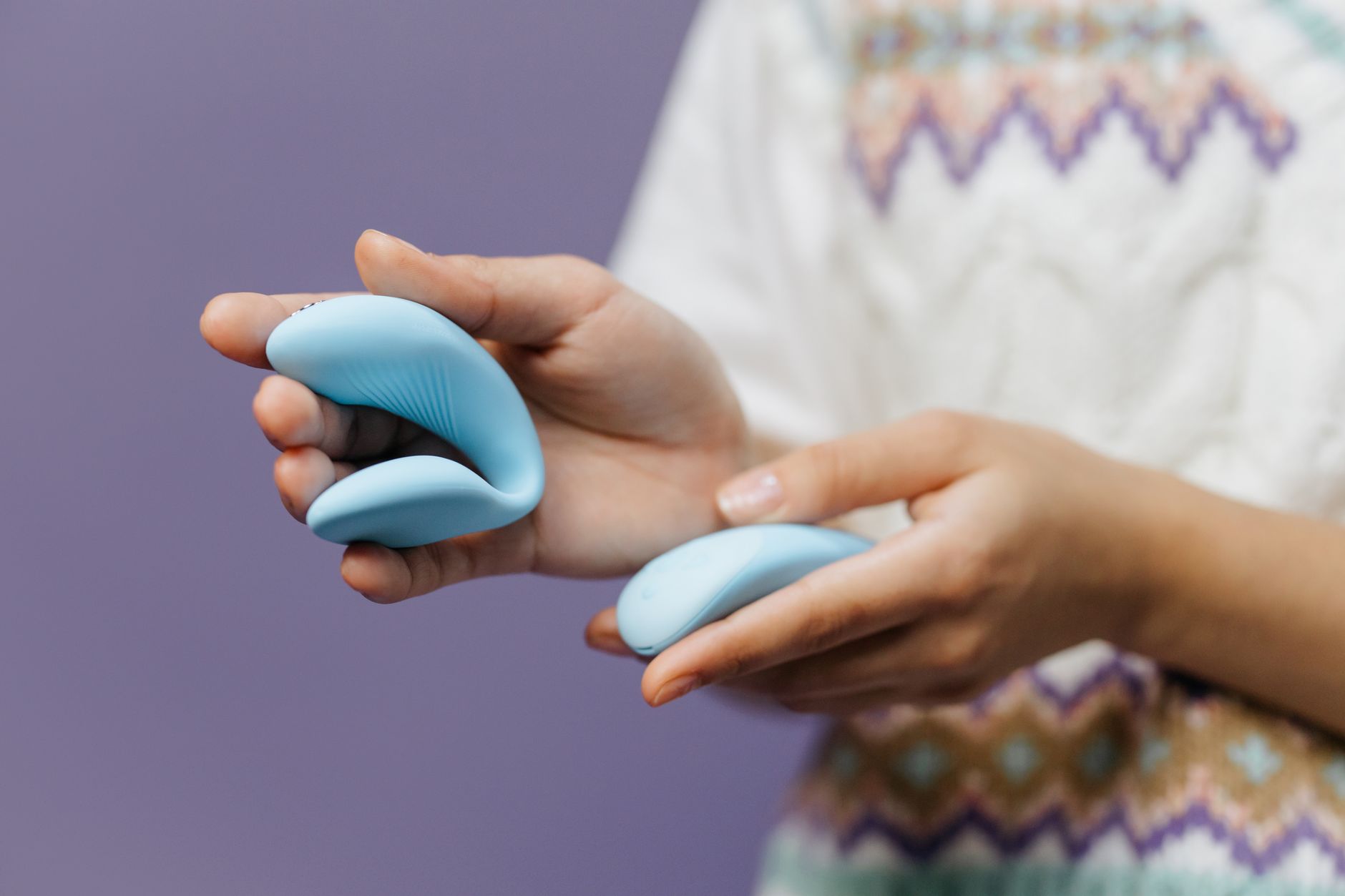
Let's talk about the gap
It could be five years, ten years, or somewhere in between. Life got in the way. Maybe there was a relationship ending, or a relationship that never quite worked in bed. Maybe depression made pleasure feel impossible. Maybe you were raising kids, managing illness, or just buried under the weight of daily survival. Whatever the reason, you're here now. And you're wondering if your body still remembers how to feel good.
Here's the truth: it does. Your nervous system hasn't forgotten. Your clitoris hasn't lost sensation. What you've actually lost is practice, and sometimes confidence. That's fixable.
Why a lemon clitoral vibrator makes sense for a restart
When you've been away from pleasure for years, jumping back into partnered sex or even solo exploration can feel like too much pressure. You're worried you won't respond quickly enough. You're wondering if something's wrong with you. You might feel self-conscious or rusty.
A lemon clitoral vibrator sidesteps a lot of that friction. It's designed to work with your body instead of requiring your body to perform. The suction-based technology means you're not relying on friction or intensity to build sensation. Instead, you're building a gentle conversation between the device and your nerve endings.
For someone returning to pleasure after years, this matters. You don't need to earn your arousal. You just need to show up and let the device do the work while your nervous system remembers what pleasure feels like.
Before you start: the mindset part matters as much as the device
I work with clients who've had long absences from sex and pleasure, and the biggest barrier isn't usually physical. It's the story you're telling yourself about the gap.
You might think: "My body is broken." It's not. "I've forgotten how." You haven't; it's muscle memory and nerve memory both. "This is going to feel weird." It probably will feel different, and that's okay. Different isn't bad.
Before you even touch a lemon vibrator, give yourself permission to go slow. You're not trying to recapture what you used to feel. You're discovering what you feel now. That's different and often better.
How to set yourself up for success
Three practical things change the entire experience.
Make the environment actually inviting. This doesn't mean candles and rose petals if that's not your style. It means a locked door, a comfortable place to lie down, a room temperature that doesn't make you want to leave. If you share a bed with a partner, consider the guest room or wait for a time when you're alone. The point is permission and absence of interruption.
Give yourself time. A long absence means your arousal cycle needs runway. Budget 30 to 45 minutes, even if you end up using only 20. The knowledge that you have time changes how your nervous system responds. You're not racing. You're exploring.
Have water and a towel nearby. You might feel dehydrated. Your body might respond more or differently than you expect. This is normal. Having supplies nearby means you're not breaking the moment to problem-solve.
The first session: what actually happens
Start with the device on the lowest setting. Not because you're fragile, but because after years away, your clitoris is essentially relearning what stimulation feels like. Jumping to intensity 4 or 5 is like going to the gym after five years and maxing out the weight stack. Your body will resist.
Hold the lemon vibrator against your clitoris. You might feel immediate sensation. You might feel almost nothing at first. Both are fine. Let it sit there for 30 seconds to a minute. Your nerves are waking up.
After that minute, you can experiment. Move it slightly. Try a different pattern. Notice what feels good versus what feels neutral. You're not trying to have an orgasm. You're trying to remember what pleasure registers as.
Many people find that in the first session, they reach maybe 60% of what they remember feeling, or they feel something entirely different. That's expected. Your body has changed. Your nervous system has changed. That's not a failure. It's data.
Managing the emotional part of reawakening
Some people feel nothing and panic. Others feel a lot and get overwhelmed. Both responses are real and both are worth acknowledging.
If you feel nothing, it's usually one of three things: you're still in your head (performance anxiety is a powerful numbing agent), the timing isn't right (you might be tired or stressed), or you need more time. Come back in a few days. Your body isn't broken.
If you feel overwhelmed by sensation, that might be grief, or relief, or just the intensity of your nervous system waking up after a long sleep. Let yourself feel it. You don't need to do anything with it. Sit with it. This is normal.
Building consistency without pressure
The difference between a one-time exploration and actual reawakening is repetition. Not pressure. Not performance. Just consistent, low-stakes practice.
I recommend touching base with pleasure once or twice a week. Not because you "should," but because your nervous system needs practice remembering. The more you invite sensation, the faster your arousal cycle accelerates and the more readily your body responds.
This doesn't have to lead anywhere. You don't have to reach orgasm. You don't have to feel amazing. You're just maintaining an ongoing conversation with your body about what feels good.
When to involve a partner (and when to wait)
If you're in a relationship, the impulse is often to share this experience immediately. Resist that for a bit.
Using a lemon clitoral vibrator alone first gives you three advantages. One, you learn what your body responds to without pressure to perform. Two, you build confidence before adding another person's expectations into the room. Three, you have a concrete experience to share instead of vague anxiety.
When you do involve a partner, frame it simply: "I want to explore this on my own first, then we can play together if you're interested." That's honest and doesn't set up a dynamic where the toy becomes about fixing something in the relationship.
Common questions and what they actually mean
"Will I be able to feel the same things I used to?" Maybe not exactly the same. Your body is different. But you'll likely feel things that are just as good, sometimes better. You're not trying to go backward in time.
"What if nothing happens?" Then nothing happens this time. Come back next week. Pleasure responds to practice and patience, not force.
"Is it normal to feel self-conscious using a toy after such a long break?" Wildly normal. You've been away, and there's a story attached to that absence. The self-consciousness fades with repetition. Every session, it gets easier.
"Should I use lubricant?" Water-based, always. Even if you don't think you need it. Lubrication changes the entire sensation and makes everything more comfortable.
"What if my partner walks in or finds out?" Lock the door. Your pleasure is yours. You don't owe anyone access to your exploration.
The real endpoint
You're not restarting to get back to where you were. You're restarting to move forward. After years away, your body and your desires have changed. That's not a loss. That's an opening.
The first few sessions with a lemon clitoral vibrator are about permission. Permission to take your time. Permission to feel what you feel, not what you think you should feel. Permission to prioritize your own pleasure without justifying it.
Everything else follows from there.
If you're nervous about any part of this process, or if after several sessions you're still not feeling much, talking with a therapist who specializes in sexual health can be genuinely helpful. There's no shame in that. Some people need a little professional support to reconnect after a long break, and that's exactly what we're here for.
Your body hasn't forgotten. It's just been waiting.
People also ask
How long does it typically take to feel pleasure again after years without sex?
There's no fixed timeline, but most people notice a shift within 3 to 4 sessions of consistent exploration. Your nervous system is relearning, not learning from scratch, so the process is usually faster than you'd expect. That said, if you're managing depression, hormone changes, or relationship anxiety, it might take longer. That's not abnormal. You're working with your whole system, not just your body.
Can I use a lemon vibrator if I haven't had sex in over a decade?
Absolutely. Long absence doesn't change how the device works or how your body responds. If anything, a lemon clitoral vibrator is ideal because it doesn't require you to have maintained a specific level of arousal capacity. It works with whatever your starting point is.
Is using a toy alone the same as partnered sex after a long break?
No, and that's actually good news. Solo exploration with a lemon vibrator is lower pressure and teaches you what your body likes without the complexity of another person's needs or expectations. Once you've built that foundation, partnered sex can actually be better because you're coming to it with more self-knowledge.
What if I'm nervous about having an orgasm after so long?
That's incredibly common. Your nervous system might be worried about what happens if pleasure actually builds. Give yourself permission to not orgasm. If it happens, great. If it doesn't, that's fine too. The point is sensation and reconnection, not achieving a specific outcome. Remove the destination and the journey gets a lot easier.
Should I tell my partner I'm using a lemon vibrator?
That depends on your relationship and your comfort. If you share a bed and they'll likely find out, being upfront early is usually smoother than them discovering it later. If you live separately and want to explore on your own first, you don't owe them access to that process. Frame it however feels honest to you.
What if I'm returning to pleasure after sexual trauma?
That's a conversation worth having with a trauma-informed therapist before or alongside solo exploration. A lemon clitoral vibrator can absolutely be part of your healing, but it works best alongside professional support. Your nervous system needs both safety and professional guidance when you're working through trauma.