Let's name what's actually happening
Divorce doesn't just end a marriage. It dismantles the sexual identity you built alongside someone else. After months or years of navigating hurt, logistics, and the grief of "we're not doing this anymore," the last thing you might feel is horny. And that's completely normal. What's less obvious is that desire doesn't disappear. It just goes into hiding while you reorganize your entire life.
The good news: it comes back. And when it does, you get to decide what that looks like. For the first time in a long time, maybe the only time. That's where a lemon vibrator becomes less about orgasm and more about reclamation.
Why pleasure feels different post-divorce
Here's what I see in my practice: people who've been through divorce often describe their sexuality as "switched off." But it's not switched off. It's tangled up in anger, betrayal, grief, or resentment toward a partner who's no longer in the room. Your body learned to respond to one person, one dynamic, one set of boundaries. Suddenly, all of that context vanishes. Your nervous system doesn't know how to function in that space.
Addition by subtraction matters here. Without the pressure to perform for someone else, to manage their feelings, or to suppress your own needs to keep peace, something shifts. The mental load drops. Your brain has room to think about what you actually want instead of what you've been conditioned to want.
That's where solo exploration with a lemon vibrator comes in. It's not about replacing a partner. It's about proving to yourself that pleasure exists independent of anyone else. That it's yours.
Starting with no pressure (and no timeline)
I recommend thinking about this in phases, not as a race to "feeling better."
Phase one: Permission. This sounds soft, but it's not. You need to actively grant yourself permission to explore your own body without performance metrics. No "I should be enjoying this by now." No comparison to your previous sexual life. Just curiosity. If you touch yourself and feel nothing for ten minutes, that's not failure. That's data.
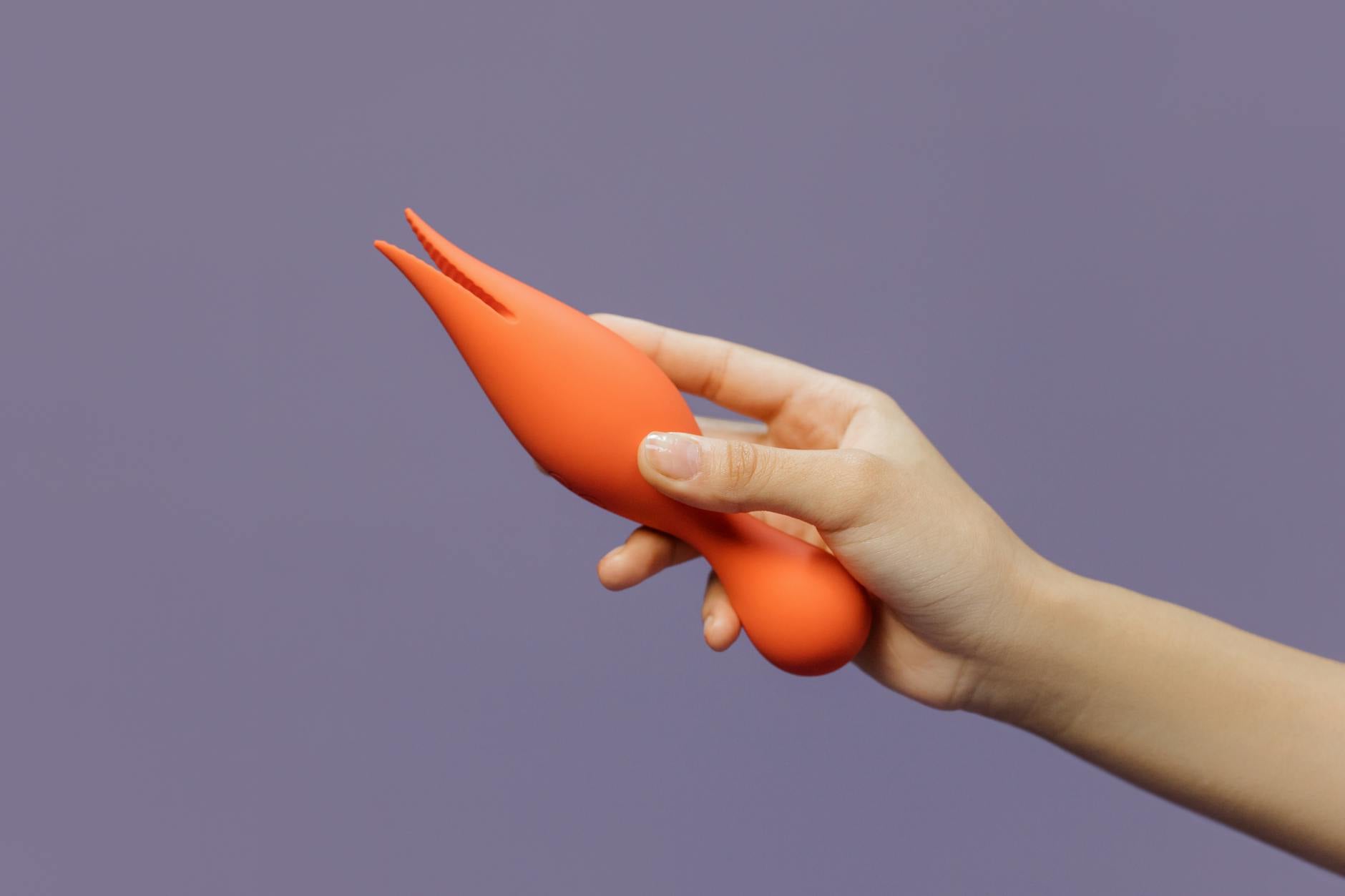
Phase two: Introduction. When you're ready, bring in a Hello Nancy's Lemons clitoral vibrator like the Lemon vibrator. Don't use it with an end goal in mind. Don't track orgasms. Don't grade the experience. The first few times, it's about noticing sensation without judgment. Warm water, privacy, no rush.
Phase three: Rhythm-building. Once the vibrator feels neutral rather than scary, let yourself explore patterns. Start at lower intensities. Find the rhythm your body prefers right now. This isn't the rhythm that worked pre-divorce. Your body has shifted. Honor that.
How a lemon vibrator helps when trust is the real issue
Divorce breaks trust in your partner. It often breaks trust in your judgment. Using a vibrator quietly, alone, with full control, helps rebuild trust in your own body. You're not negotiating. You're not waiting for permission. You're not managing someone else's insecurity about toys or desire.
A lemon clitoral vibrator is particularly useful here because suction-based stimulation doesn't require the same mental focus as manual touch. You can turn it on, settle into sensation, and let your nervous system relax. There's less room for performance anxiety. There's more room for actual feeling.
Many people tell me that the first time they experienced pleasure again after divorce, it was solo with a toy. That matters. It's a reclamation.
The practical rhythm that works post-divorce
I suggest starting with a pattern like this:
Tuesday or Thursday evening. Midweek, not weekend (weekends can carry heavier emotional weight if you're co-parenting or managing social life). After kids are asleep, after work emails are done. When your mind is available.
20 minutes maximum. Not because you need to rush, but because a bounded timeframe removes the "am I doing this right" spiral. If you don't orgasm by minute 20, you're done. Try again next week. No judgment.
Lemon vibrator at setting 2 or 3. Start low. Let your body warm up. If you want more intensity, you can increase. Most people find they prefer patterns over straight vibration post-divorce because patterns feel less aggressive, more exploratory.
Same space every time. Your brain loves ritual. If it's always your bedroom, or your bathroom, or a specific chair, your nervous system will start to anticipate pleasure. That anticipation is half the battle.
This isn't a mandate. But consistency beats intensity when you're rebuilding.
When grief shows up during pleasure
This happens more than you'd think. You're using a lemon vibrator, your body is responding, and suddenly you're crying. The grief isn't about the vibrator. It's that your body has been in shutdown mode, and pleasure is the first thing that cracks it open.
Let it happen. Pause the toy. Sit with it. Your nervous system is learning that it's safe to feel again, and it's using the tools available.
If this pattern intensifies, or if you find yourself unable to access pleasure without spiraling into anger or sadness, that's a signal to work with a therapist who specializes in post-divorce recovery. Pleasure should eventually feel untangled from the marriage. If it doesn't, that's worth professional support.
The moment you realize desire is actually coming back
Most people describe it like this: one day, maybe three months in, maybe a year, you think about touch and something in your body responds. Not because you've forced it. Not because you've done the work perfectly. Just because time and gentle exploration have loosened the knot.
That's when you get to decide what comes next. Maybe you want a partner eventually. Maybe you don't. Maybe you want to explore clitoral vibrators solo indefinitely, and that's genuinely enough. The point is, you'll decide from a place of actual desire, not from fear or obligation.
A lemon vibrator doesn't heal divorce. But it does prove something essential: your body belongs to you. Your pleasure matters. And you get to have both, even after everything falls apart.
Frequently asked questions
How long does it usually take to feel desire again after divorce?
There's no standard timeline. Some people feel glimmers within weeks. Others take eighteen months or longer. The pressure to "move on" sexually often makes the process slower, not faster. When you stop waiting for desire to return and start exploring at your own pace with tools like a lemon vibrator, it tends to show up more naturally. The goal isn't to meet a deadline. It's to reconnect with your own body.
Can using a vibrator make it harder to be intimate with a partner later?
No. In fact, the opposite is often true. When you understand your own body, your own rhythm, and what actually brings you pleasure, you're better equipped to communicate that to a partner. Learning with a lemon sexual toy solo makes you a clearer communicator later, not a less available one.
What if I feel ashamed using a vibrator after divorce?
Shame is usually inherited from whoever told you that solo pleasure was wrong. Divorce is a moment to question those inherited beliefs. Your body's pleasure is not a betrayal of your ex. It's not a betrayal of your marriage. It's just yours. If shame persists, it's worth exploring with a therapist, because shame often shows up where grief or anger is unprocessed.
Should I tell my co-parent or friends that I'm using a vibrator?
No. This is private. Full stop. If a custody arrangement, friendship, or potential future relationship requires you to disclose your solo sexual practices, that's a boundary issue worth examining. You don't owe anyone access to your private pleasure.
Is it better to use a lemon vibrator or manual touch when rebuilding desire?
Neither is "better." A lemon clitoral vibrator can be easier when your nervous system is fragile because it removes the demand for active participation. Manual touch requires more presence. Try both. See what your body asks for.
What if I'm not interested in orgasm, just in feeling something?
That's actually the healthiest starting point post-divorce. Orgasm is a bonus, not the goal. Many people use lemon vibrators initially just to practice sensation without pressure. That's completely valid. Pleasure exists on a spectrum. Orgasm is just one point on it.
You get to write this chapter
Divorce took something from you. It doesn't get to take your pleasure too. Using a lemon vibrator isn't about "moving on" or "getting over it" or any of the pressure-laden language that surrounds post-divorce sexuality. It's about walking back into your own body with curiosity instead of fear. With agency instead of obligation. With permission instead of shame.
Your desire will return. When it does, it will be yours alone.