Let's start with the honest part
Years of mismatched desire don't just disappear when you decide to reconnect. They calcify. One person stops asking. The other stops expecting. Sex becomes something that happens to you rather than something you want, and after enough time, you forget which is which.
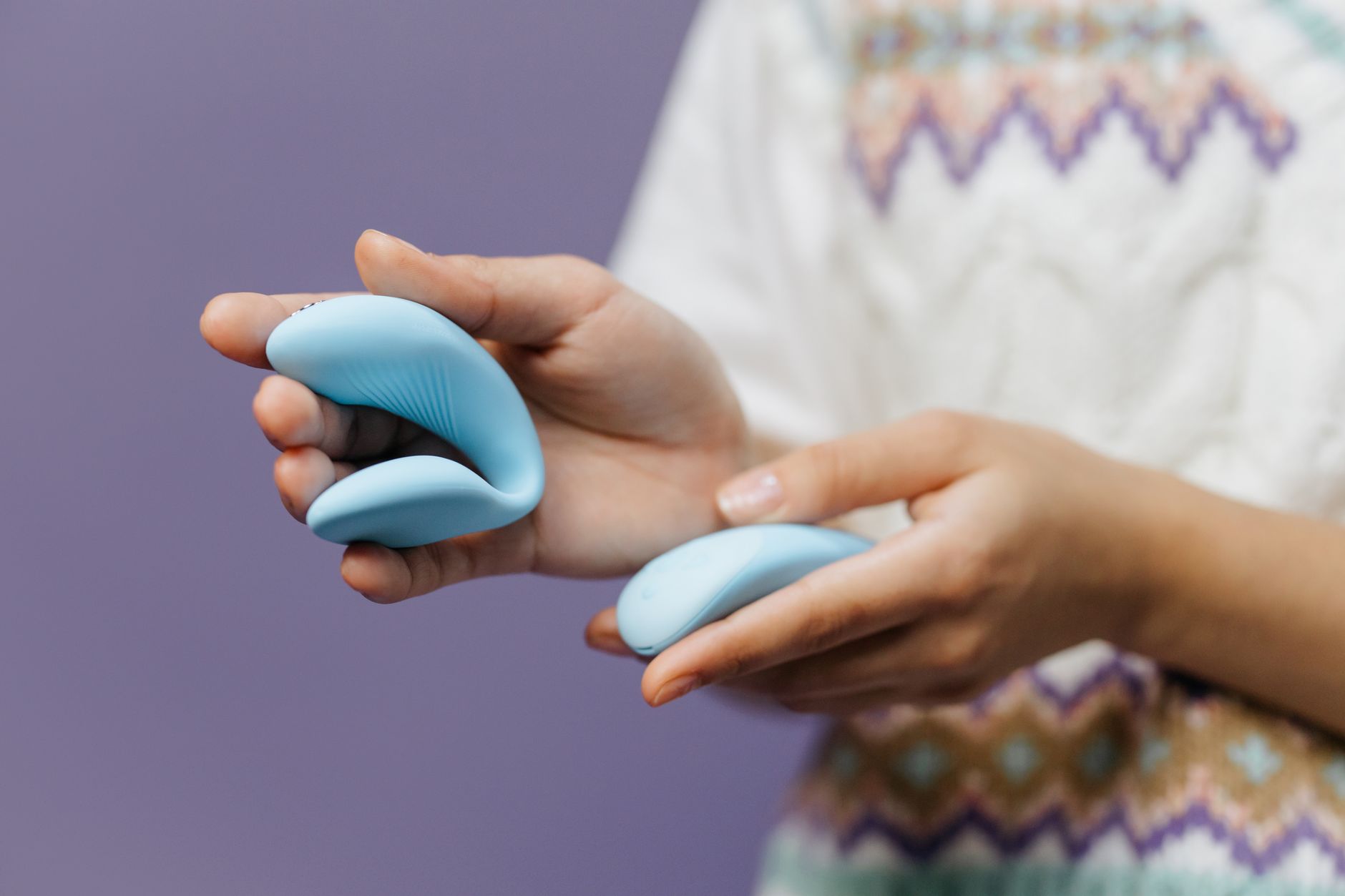
Rebuilding desire after that kind of drought requires more than communication tools or date nights. It requires you to reconnect with your own pleasure first, separately, before you try to synchronize it with someone else's. That's where a lemon clitoral vibrator from Hello Nancy's Lemons becomes not a Band-Aid but a genuine reset button.
Why mismatched desire destroys your sexual baseline
When partners have significantly different desire levels for long stretches, something shifts in the nervous system. The lower-desire partner often feels guilty or broken. The higher-desire partner learns to stop initiating because rejection stings too much. Over time, both partners unconsciously deprioritize pleasure as though it's selfish or complicated.
But here's what actually happens physiologically: your body forgets what arousal feels like. The neural pathways that connect thought to sensation get rusty. You might go months without an orgasm, or experience them mechanically without the sense of anticipation that makes sex worth having.
Adding a partner to that situation doesn't fix it. They can't reignite what you've already started to let go of. You have to do that first, on your own terms, in your own time.
The case for solo reconnection
This is the part where most couples get stuck. They assume rebuilding desire means spending more time together, planning elaborate dates, trying new positions. Sometimes those help. But they skip the fundamental step: reconnecting to your own body's signals.
Using a lemon vibrator solo is not a detour from couple's intimacy. It's the foundation for it. When you're alone, you can explore without performing. You can notice what actually feels good instead of what you think should feel good. You can go slow without worrying someone's waiting. You can stop whenever you want without managing a partner's disappointment.
This is especially true if you've spent years accommodating a partner's preference or lack thereof. Solo exploration gives you permission to be selfish about pleasure, which sounds wrong but is exactly what reconnection requires.
How to start: the three-phase approach
Phase one: permission and observation (Week one to two)
Don't go straight to climax. Start by using your lemon clitoral vibrator on the lowest setting for 5 to 10 minutes, a few times a week, without any goal attached. The goal is sensation, not orgasm. Notice what patterns feel good. Does suction stimulation feel different from vibration? Does your clitoris prefer consistent rhythm or varied patterns? What draws your attention best when you're alone?
Keep your phone away. Dim the lights. Tell your partner you need an hour alone but don't over-explain it. You're not in therapy. You're just reconnecting.
Phase two: building anticipation (Week three to four)
Once you've noticed what feels good physically, add anticipation. Spend 10 to 15 minutes before you even touch yourself thinking about pleasure. What have you been missing? What's your fantasy that you've long abandoned? You don't need to act on it. Just notice it.
Then use your lemon vibrator with intention. Try different settings. Spend time with speeds that used to work before everything got complicated. Notice whether your capacity for sensation has changed.
Many clients report that their orgasms feel different after a long drought. Sometimes duller initially, sometimes more intense. That's normal. Your nervous system is recalibrating.
Phase three: integration with a partner (Week five onward)
Once you've spent a few weeks alone, you're ready to bring a partner back in. But not immediately during partner sex. First, tell them what you've learned. "Using my lemon vibrator alone, I noticed I prefer slow builds." Or "My sensitivity has shifted and I need more focused stimulation than I used to."
Then, next time you're together, invite them to watch you. Not to participate yet. Just to see. This accomplishes three things: it reminds your partner that you have desires, it gives you the safety of being seen, and it breaks the pattern of sex being something that just happens to you.
After that, your partner can hold the vibrator for you, or you can use it together, or you can use it during partnered sex. The logistics matter less than the fact that you've reestablished your pleasure as a shared priority.
When both partners are ready
Here's where the conversation changes. Once you've rebuilt your own desire baseline, you and your partner can actually talk about sex without defensiveness.
The person who had low desire can say: "I realize I checked out, and here's what I'm doing to check back in." The person who had high desire can say: "I stopped asking because rejection hurt, and I need to hear that you actually want me again." These are real conversations. They take time.
Using a lemon vibrator together can be part of that process. If your partner feels insecure about the vibrator, that's real and worth addressing. But so is this: "I'm using this tool to reconnect with what feels good because I want our sex life to be satisfying for both of us." That's not defensive. That's collaborative.
Common traps to avoid
Don't use solo exploration as punishment or rejection of your partner. If you're angry about years of mismatched desire, that anger needs to be processed separately from pleasure. Solo play and couples therapy aren't the same thing, but they work better together.
Don't expect your desire to ramp back up overnight. Reconnection is weeks, not days. Some clients take months. That's fine.
Don't shame yourself for needing a tool. A lemon clitoral vibrator isn't a sign that something's wrong with you or your relationship. It's a precision instrument that helps you feel what you've forgotten you can feel. That's the whole point.
Why the Lem specifically helps here
Most people rebuilding desire need gentleness and control. A lemon suction vibrator like the Lem gives you both. The suction sensation feels different from traditional vibration, which can be helpful if your old patterns aren't working anymore.
You can start at pattern one and stay there for as long as you need. There's no pressure to escalate. The sensation is focused but not abrasive, which matters when your body's been dormant. And because suction works through the skin rather than direct friction, it feels safer to explore for longer periods without discomfort.
You also control the entire experience. If your partner's involved, you still control the pace and intensity. That agency is essential when you're rebuilding trust in your own body.
The timeline nobody mentions
Years of mismatched desire take time to heal. Phase one through three might stretch across two, three, even four months. Some couples reconnect faster. Some take a year. The speed doesn't matter. The consistency does.
Use your lemon vibrator two to three times a week throughout. Track what you notice. When you're with your partner, share what's shifted. Not everything at once. Small observations that keep the conversation going: "My body felt ready for more intensity this week." Or "I realized I'd forgotten how much I like this part."
Eventually, your own desire stabilizes. Then you can synchronize with your partner's without either of you feeling guilty or resentful. That's when sex stops being a problem to solve and starts being a thing you both want again.
When you're truly stuck
If you've spent six weeks doing solo work with a lemon vibrator and you still feel completely numb, or if your partner is refusing to acknowledge the problem, you need a couples therapist. This isn't a failure. It's recognizing that some patterns run too deep for self-care alone.
A good therapist trained in desire discrepancy can help you both understand what created the mismatch in the first place. Often it's not about sex at all. It's about feeling unseen, unheard, or unsafe. A lemon clitoral vibrator can help you reconnect to pleasure, but it can't fix betrayal or resentment. That takes professional support.
But if you're both willing, and you start with yourself first, reconnection is entirely possible. Thousands of couples have rebuilt desire from much worse starting points than yours.
FAQ
How long until I feel desire again after years of mismatch?
Most people notice small shifts in 3 to 4 weeks of consistent solo exploration. Real reconnection with a partner typically takes 2 to 3 months. Some take longer. Don't use a timeline as a measure of success. Consistency matters more than speed. If you're exploring with a lemon vibrator 2 to 3 times weekly and noticing anything different, even something small, you're on track.
Should I hide my lemon vibrator use from my partner?
Not if you want to rebuild desire together. Secrecy reinforces the shame that created the problem in the first place. Tell your partner: "I'm using a vibrator to reconnect with what feels good because I want our sex life to work for both of us." That's not a threat to them. That's you claiming your pleasure back, which ultimately benefits both of you.
What if my partner feels threatened or jealous?
That's real, and it's worth taking seriously. Ask your partner what they're afraid of. Often it's not the vibrator. It's "Does this mean you don't want me?" or "Are you leaving?" Address those fears directly, separate from the tool. Then, once trust is rebuilt, invite them to be part of the exploration if you both want that.
Can I use a lemon vibrator during couple's sex while rebuilding?
Absolutely, but usually not at first. Start solo. Then solo while your partner's present. Then your partner involved. This progression matters because it helps you reclaim your pleasure as yours before it becomes shared. When you do use it together, you're not replacing the partner. You're adding precision to the experience.
What if I orgasm with the vibrator but not with my partner?
This is common and not a sign of failure. Your body knows where it can safely let go. Using a lemon clitoral vibrator is actually a bridge. Many people find that over weeks or months, they start to relax during partnered sex too because they've proven to themselves that their body still works. Pressure makes this worse. Patience makes it better.
How do I know if I should use a lemon vibrator or seek therapy?
Both, ideally. A vibrator helps you reconnect physically. Therapy helps you understand the relationship patterns that created the mismatch. If you're working with a couples therapist, mention the vibrator. Good therapists understand that solo pleasure is part of healing. If you're not in therapy and you've tried solo exploration for 6 weeks with no shift at all, that's when therapy becomes the priority.
Rebuilding desire after years of mismatch is some of the hardest work couples do. But it starts simple: reconnecting to your own body, on your own timeline, with a tool that makes pleasure accessible again. The lemon vibrator isn't magic. You are. The vibrator just helps you remember.