Let's talk about what HRT actually does to pleasure
Hormone replacement therapy changes sexual response. But not in the way most people think. If you've just started HRT or you've been on it for a few years, you might notice that your orgasms feel different, that arousal builds differently, or that the settings you used to love on your lemon vibrator suddenly feel off. That's not a sign something's wrong. It's your body recalibrating.
Here's the thing nobody explains clearly: HRT doesn't magically restore your sexuality to some imaginary peak. It restores stability to your hormones, which changes the baseline for everything else. Pleasure included.
How HRT rewires arousal timing
When you're on hormone replacement therapy, estrogen and progesterone levels stay relatively consistent throughout the cycle. That's different from the natural spike-and-dip pattern most people with ovaries experience. Steady hormones mean steady baseline arousal, which sounds great until you realize it also means less of those sudden surges where pleasure builds fast and intensely.
Instead, arousal tends to build more gradually and linearly when you're on HRT. This is actually a benefit, but only if you adjust your expectations. The lemon vibrator's lower settings suddenly make more sense here. You're not missing something. You're just working with a longer runway.
What this means for your practice: Start with patterns 1 or 2 on the Lem and give yourself 20-30 minutes instead of 10. You'll find that arousal builds steadily rather than hitting a wall. Many people report that the plateau phase feels longer and more exploratory on HRT, which means more room to experiment with different sensations without hitting overstimulation.
Sensitivity changes and how the lem adapts
Progesterone, when stable, tends to make tissue slightly less sensitive to direct pressure. This is why some people find they need a bit more intensity once they're on HRT. The clitoral suction pattern of a lemon vibrator becomes especially useful here because suction stimulates without the same mechanical friction that can feel overwhelming on direct-touch devices.
The inverse sometimes happens too. If you're using higher-dose estrogen, you might find the opposite: increased sensitivity, especially around ovulation-equivalent times (which blur on HRT). This is why having a device with adjustable intensity matters. You're not broken if your tolerance has shifted.
What to do: Experiment methodically. Spend two weeks at pattern 3, note how it feels. Try pattern 4 the next week. You're mapping your new normal, not chasing your old one.

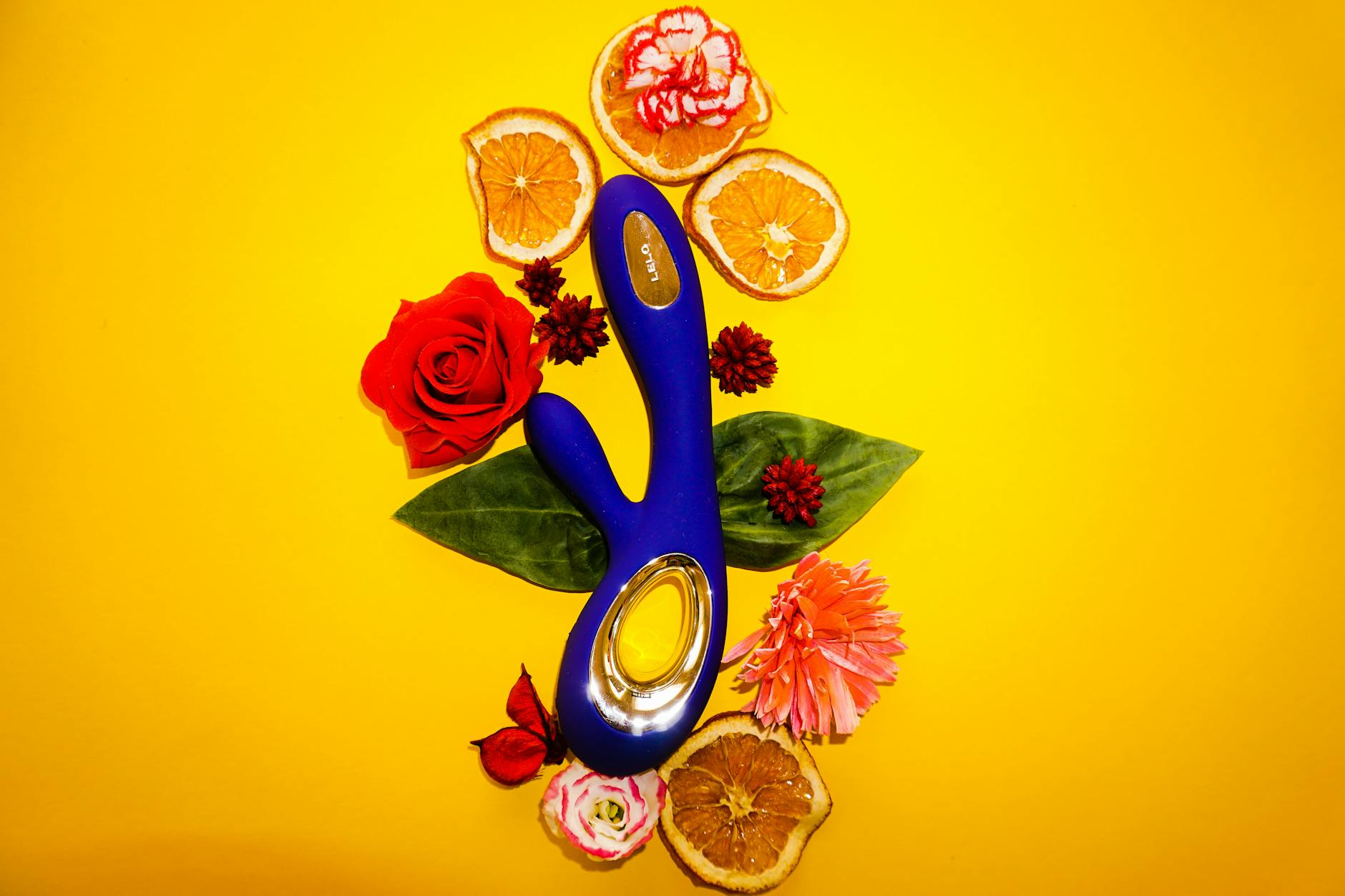
Photo by Diana ✨ on Pexels
The lubrication shift nobody talks about
This is where HRT gets weird in a practical way. Estrogen increases vaginal blood flow and helps tissue retain moisture. If you're on an estrogen-heavy HRT regimen, you might find that you actually need less external lube than you did before HRT. Some people are shocked by this. They were told menopause dries everything up, they go on HRT, and suddenly they're producing more natural lubrication than they have in years.
Other people experience the opposite, especially if they're on progesterone-dominant protocols. Progesterone can be drying. And some HRT regimens balance the two in ways that feel inconsistent day to day.
The variable is usually the dose, the delivery method (patch vs. pill vs. cream), and how your liver processes the hormones. A gynecologist who knows this can help you dial it in. Until then, your best friend is a water-based lube that you can use sparingly or generously depending on the day.
Orgasm quality gets more complex
One of the weirdest things about HRT is that orgasms often feel different, not necessarily better or worse. Some people report stronger sensations. Others find that the intensity decreases slightly but the duration increases. A few say that multiple orgasms become easier. Some say the opposite.
What's consistent: most people find that orgasms on HRT feel more stable. They happen reliably when conditions are right. On HRT, you're not chasing a moving target of hormonal fluctuation. This actually makes experimentation easier. You can try a new pattern on the Lem, get reliable feedback about whether it works, and adjust from there.
The practical shift: If you're used to chasing intensity, try chasing duration instead. Use the mid-range settings (3-5) on your lemon clitoral vibrator and see if a longer, slower plateau feels better than the quick spike you were aiming for before HRT. Many people find this more satisfying over time.
When your partner needs to adjust too
If you have a partner, HRT changes the dynamic in ways that aren't just about your body. If you're more consistently interested in sex (which steady hormones often enable), your partner might not have their own rhythm aligned with yours anymore. The spontaneity that hormonal fluctuation created is gone.
This is actually useful information. It means you can plan and prepare rather than relying on chance. But it also means the conversation with your partner has to shift from "it depends on my cycle" to "here's what my new normal is, and here's what I need."
Timing matters differently on HRT
On natural cycles, there's often a window of time each month where pleasure is easiest. On HRT, that window theoretically doesn't exist. Hormones are stable. But what does matter is time of day, stress level, sleep, and what you've eaten. These microexpressions of your hormonal state become the new variables.
Some people on HRT find they're most responsive to their lemon vibrator in the morning. Others find evening works better. Some notice they need to eat something beforehand or that exercise earlier that day makes a difference. These are real patterns. Track them.
FAQ: Common questions about lemon vibrators and HRT
Do I need a different vibrator when I start HRT?
No. Your existing lemon vibrator still works. What changes is how you use it. If you were using high settings on a less adjustable device, you might find that having more control (like the Lem's range from pattern 1 to 8) gives you better options now. But you don't need to throw out what works.
Will my orgasms come back exactly the way they were before?
Probably not, and that's okay. HRT isn't a time machine. It's a stabilizer. Most people find that orgasms on HRT feel more reliable and less erratic than during menopause, but they may feel different than they did 10 or 20 years ago. That's normal aging on top of hormonal change.
How long does it take to adjust to using my lemon clitoral vibrator on HRT?
Three to six weeks of consistent experimentation. Give your body time to adapt to the new hormonal baseline. Then give your nervous system time to map new pleasure responses. Rush this and you'll think something's wrong. Take your time and you'll discover what works.
Can HRT make me more or less sensitive to stimulation?
Both happen. Estrogen usually increases sensitivity. Progesterone can decrease it. Your specific HRT formula, dose, and delivery method matter. If sensitivity changes feel dramatic or uncomfortable, that's worth discussing with the doctor prescribing your HRT.
Should I change my lube when I start HRT?
Maybe. If you were using lube because of dryness during menopause, you might need less or none on HRT. If you're still dry (or become dry partway through your cycle on HRT), stick with water-based lube. Silicone lubes can damage silicone toys like the Lem, so if you're committed to your lemon vibrator, water-based is safer.
Is it normal to feel disconnected from pleasure when starting HRT?
Yes, temporarily. Your nervous system is adjusting to stable hormones after months or years of fluctuation. You might feel a bit numb or disconnected for a few weeks. Then it usually passes as your body recalibrates. If it doesn't pass after 8-12 weeks, talk to your doctor.
What happens if your HRT settings change
If your doctor adjusts your dosage, you're essentially starting over with your pleasure baseline. Not from scratch, but it's worth treating the adjustment period seriously. Give yourself grace and curiosity instead of frustration.
Same rule applies if you switch delivery methods (pill to patch, for example). The way your body absorbs and processes hormones changes, and pleasure is one of the first things to shift.
The real thing that matters most
HRT changes your baseline. Your lemon vibrator doesn't. That's the useful part. You have a reliable tool that adapts with you. You're learning how to use it in a new body that's finally stable. That's not a loss. That's information.
If you're struggling with pleasure on HRT after six weeks of genuine experimentation, talk to a menopause-trained doctor or a sex therapist. Sometimes what feels like a pleasure problem is actually a hormonal balance issue that your HRT regimen can solve. Sometimes it's something else entirely. But you deserve to feel good in your body. HRT should help with that, and your lemon vibrator is a useful partner in figuring out what you need.
Ready to explore how your body responds on HRT? Start with lower settings, give yourself time, and trust the process. Your pleasure is worth the attention.