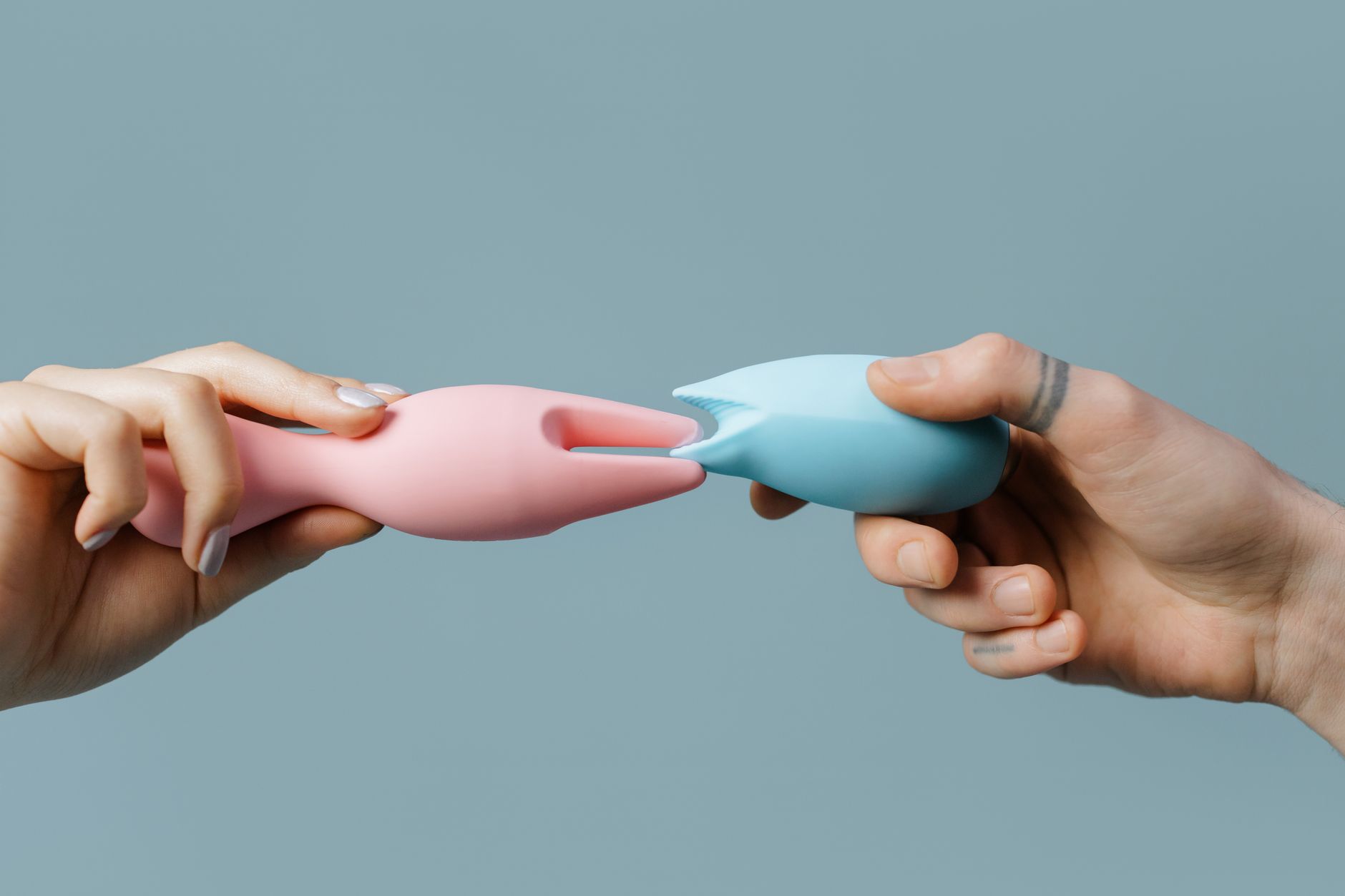
Let's talk about what multiple orgasms actually are
Here's the thing: your body is capable of back-to-back orgasms. Most people just haven't learned the trick yet. Multiple orgasms aren't rare or special. They're a skill. And the tool you use matters.
A lemon vibrator from Hello Nancy's Lemons changes the math entirely because it works with your body's natural recovery rhythm instead of against it.
Why most attempts at multiple orgasms fail
People get one orgasm, then try to keep going at full speed. This almost never works. Your nervous system needs a specific pattern. After you come, your genitals go through what's called the refractory period. For people with vulvas, this is typically short (seconds to minutes), but your clitoris becomes hypersensitive. Blast it with the same intensity and it feels like static, not pleasure. That's where most sequences end.
The second mistake is pacing. People either go too fast (and numb out) or take a full break (and lose momentum). There's a middle ground where the magic lives.
Here's what Hello Nancy's Lemons lemon clitoral vibrators do differently: suction technology doesn't create the same hypersensitivity as direct vibration. You can stay engaged without the burn-out.
The recovery window and how to use it
Right after your first orgasm, your clitoris is tender. For about 30 to 90 seconds, you're going to want to slow down or shift position entirely. This is the critical moment where most people stop. Don't.
Instead, lower the intensity. If you've been on setting 5 or 6, drop to 2 or 3. Keep contact, but barely. Some people prefer to move to a different area: shift from direct clitoral stimulation to the labia, the inner thigh, or the entrance of the vagina. You're keeping arousal alive without overstimulation.
With a lemon sucker like the Lem, you have another option. The suction creates a gentler, more diffuse sensation than traditional vibration. After your first orgasm, you can actually stay at a lower suction level on the same spot and keep building without the sharp hypersensitivity that makes direct vibrators unbearable.
Building momentum through the second window
After that 30 to 90 second recovery phase, you have a second window. Your arousal hasn't fully dropped, and your nervous system is primed to go again. This is where you rebuild. Gradually increase intensity. Go from 2 to 3 to 4. Don't jump. The gradual climb is what keeps your nervous system engaged without shocking it.
Your breathing matters here too. Shallow breathing cuts off blood flow. Once you hit that recovery phase, take three deep breaths. Oxygenate your system. Then as intensity rises again, match your breathing to your excitement. This isn't yoga breathing. It's active, engaged breath that tracks your arousal.
Positioning for back-to-back release
You don't have to stay in the same position for multiple orgasms, but consistency through the recovery window helps. If you switch positions or angle dramatically during that sensitive 30-second phase, you lose the thread.
Here's what works: stay put during recovery. Keep the lemon vibrator in place or nearby. Once you're rebuilding (second window), you can adjust. Some people find that shifting their hips slightly or tightening their pelvic floor through the second window intensifies the second orgasm.
If you're with a partner, communication is everything. Your partner needs to know you're not done after the first one. Many people interpret post-orgasm stillness as "finished." It's not. It's "pausing to rebuild." Make that explicit beforehand.
Why sensation mapping prevents numbness
One reason people can't chain orgasms is pure nerve fatigue. Your clitoris has roughly 8,000 nerve endings, and they can get tired if they're bombarded with the same stimulus repeatedly. Lemon clitoral vibrators help because the suction creates a broader, more diffuse sensation than a traditional vibrator's point-focused stimulation.
But you can enhance this further by varying the sensation location slightly between orgasms. After the first release, you might focus on the glans (the external part). Before the second, move focus to the clitoral body (the internal wishbone structure). The tissue is the same, but the nerve engagement is subtly different. Your nervous system stays alert instead of numbing.
This is especially useful if you're using a smaller lemon vibrator or if your clitoris is particularly sensitive. You're not moving across your whole body. You're microdosing stimulation across different regions of the same structure.
The mental game that makes it real
Multiple orgasms are partly physical and partly psychological. After your first orgasm, your brain often sends a signal that says "we're done now." That's a learned pattern, not a biological fact. You have to override it.
After recovery, as you're building toward the second orgasm, consciously tell yourself you're not finished. Don't brace for one big release. Instead, think of it as ripples. The first orgasm is wave one. You're riding back into the water for wave two.
Some people find that focusing on pleasure sensations (not orgasm itself) helps. Instead of thinking "will I come again," think "that feels amazing and I want more." The distinction sounds small. It's not. Focusing on the outcome often delays it. Focusing on the sensation invites it.
When multiple orgasms mean different sizes
Honestly, not every orgasm will feel the same. Your first might be massive. Your second might be smaller, more internal. Your third might spike again. This is normal. Your body isn't broken. You're just experiencing different types of release from different nerve pathways.
The clitoris has multiple zones, and depending on stimulation pattern and your mental state, you'll activate them differently. A lemon vibrator's flexibility (you can adjust intensity, change suction level, shift position) means you can customize each orgasm instead of chasing the same peak repeatedly.
Many people get discouraged because orgasm two feels "less than" orgasm one. It's not less. It's different. And for some people, the third or fourth orgasm is actually the most intense. You won't know until you try.
Lubrication, comfort, and going longer
If you're chaining multiple orgasms, you're spending more time in active stimulation. Your body's natural lubrication might not keep up, especially if you're using a higher-suction lemon vibrator. Water-based lube is your friend here. It doesn't interfere with suction (unlike silicone-based lubes), and it keeps friction-free sensation alive through multiple cycles.
Also, your clitoris can get tender after several orgasms if the tissue's dry. Lube prevents that rawness. It's not about needing more lubrication to become aroused. It's about protecting sensitive tissue through sustained stimulation.
If you're taking longer than 15 minutes, check in with yourself. Is this still pleasurable, or are you pushing? Multiple orgasms are a skill you build over time. Your first session might be two orgasms. That's a win. A later session might be four. There's no quota.
Common obstacles and how to work through them
Some people find that after the first orgasm, arousal just drops off. This often means the recovery phase was too long or too intense of a break. Try a shorter pause or lower the intensity less dramatically.
Others hit a plateau where orgasm two feels impossible. This usually signals that you're focused on the outcome instead of the sensation. Shift your attention. Ask yourself what feels good right now, not whether you'll come again.
If you're using a lemon sucker and it's uncomfortable after the first orgasm, you might need to lower the suction level more aggressively. Your tissue tolerance changes post-orgasm. What felt perfect at setting 5 might feel intense at setting 3. That's your body telling you what it needs.
Multiple orgasms aren't the goal. Pleasure is
I want to be clear about something. Multiple orgasms aren't a target you have to hit. They're an option your body has available. Some people naturally chain them. Others come once and that's their release. Both are completely fine.
If you're curious about exploring multiple orgasms, a lemon vibrator gives you the gentlest, most flexible way to experiment. The suction technology means you're not fighting your body's hypersensitivity. You're working with it.
Start with one orgasm and curiosity about what comes next. Use the recovery window. Rebuild gradually. See what happens. That's all.
FAQ
How long should I wait between orgasms when using a lemon clitoral vibrator?
Most people need 30 to 90 seconds of reduced stimulation after the first orgasm. This isn't a hard rule. Some bodies need 10 seconds. Others need three minutes. The clue is sensation. If your clitoris feels too tender for direct stimulation, you're in recovery. If it feels ready for more, you're ready. With a lemon vibrator, you can stay in contact at a much lower setting during this phase, which often shortens the recovery window compared to other toys.
Can multiple orgasms happen with a partner, or only solo?
Multiple orgasms work both ways. The main difference is communication. Your partner needs to know you're not finished after the first one and that you need reduced intensity or a position shift during recovery. Some couples find that using a lemon vibrator together makes this easier because the partner can control intensity and give you space to guide the experience. Others prefer to use it solo first to understand their own rhythm, then bring it into partnered sex once they've mapped their own pattern.
Why do some of my orgasms feel smaller than others?
Your body releases tension through different pathways. Your first orgasm might engage your whole pelvic floor. Your second might be more clitoral. Your third might involve a different nerve group entirely. These aren't failures. They're varieties of release. A lemon vibrator lets you explore these different types because you can adjust intensity and suction to target subtly different areas. Smaller orgasms often feel more internal or more localized. Larger ones feel more full-body. Both are real.
Is it normal for my clitoris to feel numb after multiple attempts at orgasms?
Yes, but it means you're overstimulating. Numbness is a sign your nerve endings need a break. This happens when you keep intensity too high through multiple cycles or when you rush recovery and rebuild too fast. If you're experiencing numbness, lower the intensity more aggressively between orgasms, take slightly longer recovery pauses, or use a broader-contact tool like a lemon sucker instead of a pointed vibrator. Numbness always means dial it back.
How many orgasms is normal to have in one session?
There's no normal. Some people's bodies are wired for one powerful release and that's their satisfaction point. Others naturally chain three, four, or more. The variable depends on your nervous system, arousal capacity, and what feels good that day. Stress, sleep, hormones, and your menstrual cycle all affect how many are possible. Instead of aiming for a number, aim for what feels amazing. If two orgasms feel incredible, that's your answer today. Next week might be different.
Should I use the same lemon vibrator setting for each orgasm?
Not necessarily. Most people need to lower intensity after the first orgasm to avoid overstimulation. Start lower than you think during recovery, then gradually climb back up as you rebuild. You might end up back at your original setting by orgasm two, or you might find that a lower setting actually produces a better second orgasm. Every body is different. Experiment and notice what feels best.