Let's talk about the thing nobody says out loud
Pain during sex is more common than you think, and it doesn't mean your body is broken. It means something needs to shift. Dyspareunia affects roughly one in four women at some point in their lives, and the silence around it makes it worse. You end up thinking you're the only one, or that you should just push through, or that your partner should understand without you having to explain.
Here's what I know from working with couples: the couples who move through this fastest are the ones who treat it like a logistics problem, not a failure. And that's exactly what it is.
Why pain happens, and why it matters
Pain during sex has multiple roots. Sometimes it's physical. Endometriosis, vaginismus (involuntary pelvic floor tension), vaginal atrophy, or infection can all cause it. Sometimes it's psychological. Anxiety, a history of trauma, or even just performance pressure can lock your pelvic floor so tight that penetration feels impossible. Often it's both at the same time, which is why you can't fix it with willpower alone.
The nervous system learns fast. Once penetration hurts, your body starts protecting itself by tensing up in advance. You walk into sex expecting pain, your muscles brace for it, and then pain arrives right on schedule. It's a self-fulfilling prophecy, and breaking it requires different input.
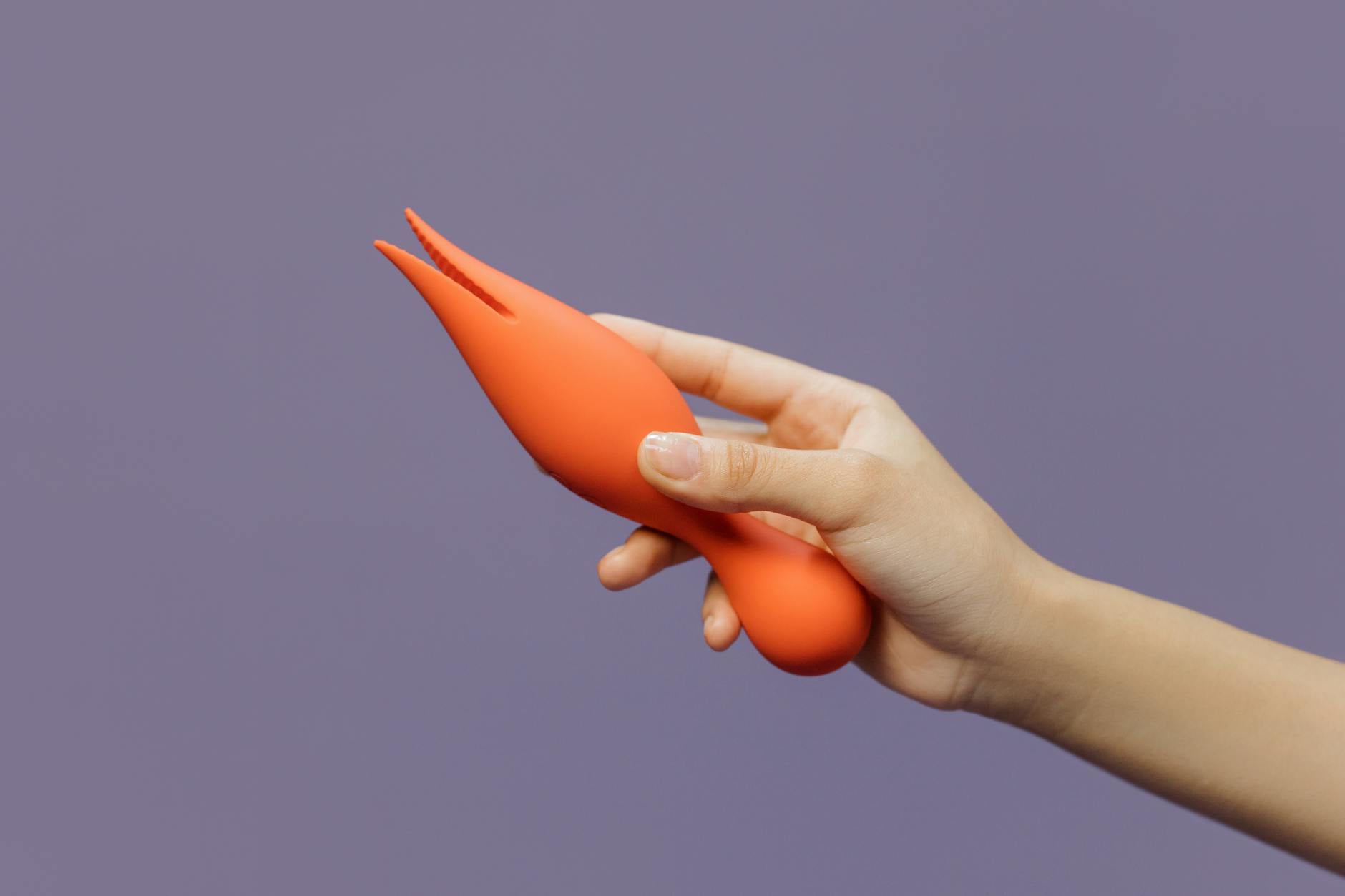
That's where a lemon clitoral vibrator like the Lem comes in. External, clitoral stimulation can bypass the pain trigger entirely. It gives your nervous system a different experience to encode.
The role of external pleasure when penetration hurts
Here's something that shifts everything: you don't have to choose between pain-free and pleasurable. Most people assume they're linked. They're not.
When penetration causes pain, external stimulation becomes your ally. A lemon vibrator's suction pattern works differently than traditional vibration. It creates a gentle pulling sensation that stimulates without the friction that can aggravate tender tissue. For someone experiencing dyspareunia, this distinction matters.
The pattern itself is important too. If you've been bracing against pain, your clitoral nerves have probably learned to expect tension. Switching to something gentler and more rhythmic gives your nervous system permission to relax. Many people find that they can reach orgasm more easily with external stimulation alone than they ever could with penetration, especially when pain has been present.
This isn't a consolation prize. This is the actual thing.
Getting the conversation right with your partner
The biggest mistake couples make is framing this as "something's wrong with you." If you're in pain during sex, that's worth addressing medically, yes. But the framing matters. Pain isn't a failure of your body. It's information.
Tell your partner clearly: "I want to explore pleasure differently while we figure this out." Not "I need to avoid penetration forever." Not "We should just stop having sex." Something like: "Using a lemon vibrator would help me feel good without the pain. I'd like to try that with you."
If your partner is reluctant about toys, read "How to Use a Lemon Vibrator When Your Partner Is Uninterested in Toys." This is workable, but it requires actual conversation.
The couples I work with find that moving away from penetration-as-the-goal actually strengthens their intimacy. You're forced to ask what feels good instead of assuming. You're forced to pay attention. That attention is what deepens connection.
When to seek medical help first
Let me be clear: if you're having pain during sex, seeing a gynecologist trained in sexual medicine is the first step, not something you do after toys don't work. Pain has causes, and some of them are fixable quickly.
If it's endometriosis, you might benefit from hormonal treatment. If it's vaginismus, pelvic floor physical therapy is genuinely transformative. If it's vaginal atrophy, topical estrogen creams work fast. A toy can coexist with these treatments, but treating the underlying cause changes everything.
The conversation with your doctor matters too. Don't say "my body doesn't work." Say "penetrative sex causes me pain at this specific location when I try this specific thing." Specificity gets you real help.
How to use a lemon vibrator when pain is part of your story
Start with external stimulation only. Use a lemon clitoral vibrator like Hello Nancy's Lemons' Lem at the lowest pattern. Your nervous system has probably learned to tense during sex, so the goal right now is to teach it something different: that stimulation can feel good without pain.
Begin slowly. Take 15-20 minutes. Go solo first, with no pressure for your partner to be there. Your body needs to learn that pleasure is possible again without the brace-for-impact response.
Use lubricant even for external stimulation. Your tissues are probably reactive right now, and lube reduces any friction. Water-based is fine. Start at the lowest pattern and stay there until your body relaxes into it.
Notice what happens. Not in a clinical way, but in a "what actually feels good" way. Does the rhythm help you relax. Does one pattern feel better than another. Pay attention to the difference between tension and release.
When you're comfortable with solo exploration, invite your partner. The framing: "I want to show you what feels good to me right now." Not as foreplay leading to something else. As the thing itself. Let that be enough. Many couples find that once penetration anxiety drops, penetrative sex becomes possible again. But that's a bonus, not the goal.
The timeline is not linear
Pain during sex doesn't resolve in three tries. Your nervous system needs time to unlearn the pattern. Two weeks is not enough. Three months is more realistic. Some people find relief in weeks, others in months. Both are normal.
You'll have better days and harder days. Stress makes it worse. Hormones make it worse. A partner who's pushy makes it worse. All of that is normal and doesn't mean you're failing.
Keep talking. Not just with your partner, but with yourself. If something hurts, pause. If something feels good, notice it. You're not trying to fix yourself here. You're trying to remember what pleasure feels like without the pain context.
What's actually possible after this
I've worked with couples who came in saying sex was off the table forever. Most of them, within six months, had rebuilt intimacy that was actually stronger than before the pain started. Not because the pain magically vanished, but because they had to get intentional about desire.
Some of them found that they preferred external stimulation permanently and built their intimate life around that. Others worked through pelvic floor therapy and rediscovered penetrative sex. Many did both. The point is they had choice again.
Your pleasure matters. Your comfort matters. The fact that penetration is painful right now doesn't mean you're broken or that your body has betrayed you. It means you get to explore what actually works for you, with actual attention and actual care.
People also ask
Can you use a clitoral vibrator if you have pain during sex?
Absolutely. In fact, external clitoral stimulation is often the best entry point when penetrative sex hurts. A lemon vibrator gives you pleasure without triggering the pain response. The suction pattern is gentler than traditional vibration, which means less irritation on already-sensitive tissue.
How long does it take for dyspareunia to improve?
That depends on the cause. If it's something fixable like an infection or hormonal, it can shift in weeks. If it's vaginismus or trauma-related, expect two to six months of consistent work. And sometimes it requires a combination: physical therapy plus therapy therapy plus different tools. The key is consistency and patience with yourself.
Should I use lube with a clitoral vibrator if I have pain during sex?
Yes. Even though you're not penetrating, lube reduces friction and makes the experience feel less urgent on already-reactive tissue. Water-based lube works great with silicone vibrators. It also signals to your nervous system that this is gentle, which helps you relax.
Is pain during sex ever just about anxiety?
It can be, but it's usually not purely psychological. Anxiety causes physical tension, which can cause pain. But pain also causes anxiety, which causes more tension. Breaking the cycle often requires both addressing what's physically happening and what's mentally happening. That might mean therapy, physical therapy, or both.
Can my partner help me work through pain during sex with a vibrator?
Yes, but only if the conversation is right. Your partner should understand that this isn't about them failing to satisfy you. It's about you reclaiming pleasure. If they can frame it that way, their presence and participation can actually deepen intimacy. If they make it about them, step back to solo exploration first.
Will using a vibrator make pain during sex worse?
Not if you're using it correctly. Start external only, use lube, start at the lowest pattern, and go slowly. The goal is to teach your nervous system that touch can feel good. Pain is the signal to stop, not push through. If something hurts, you pause. That's not failure. That's listening to your body.