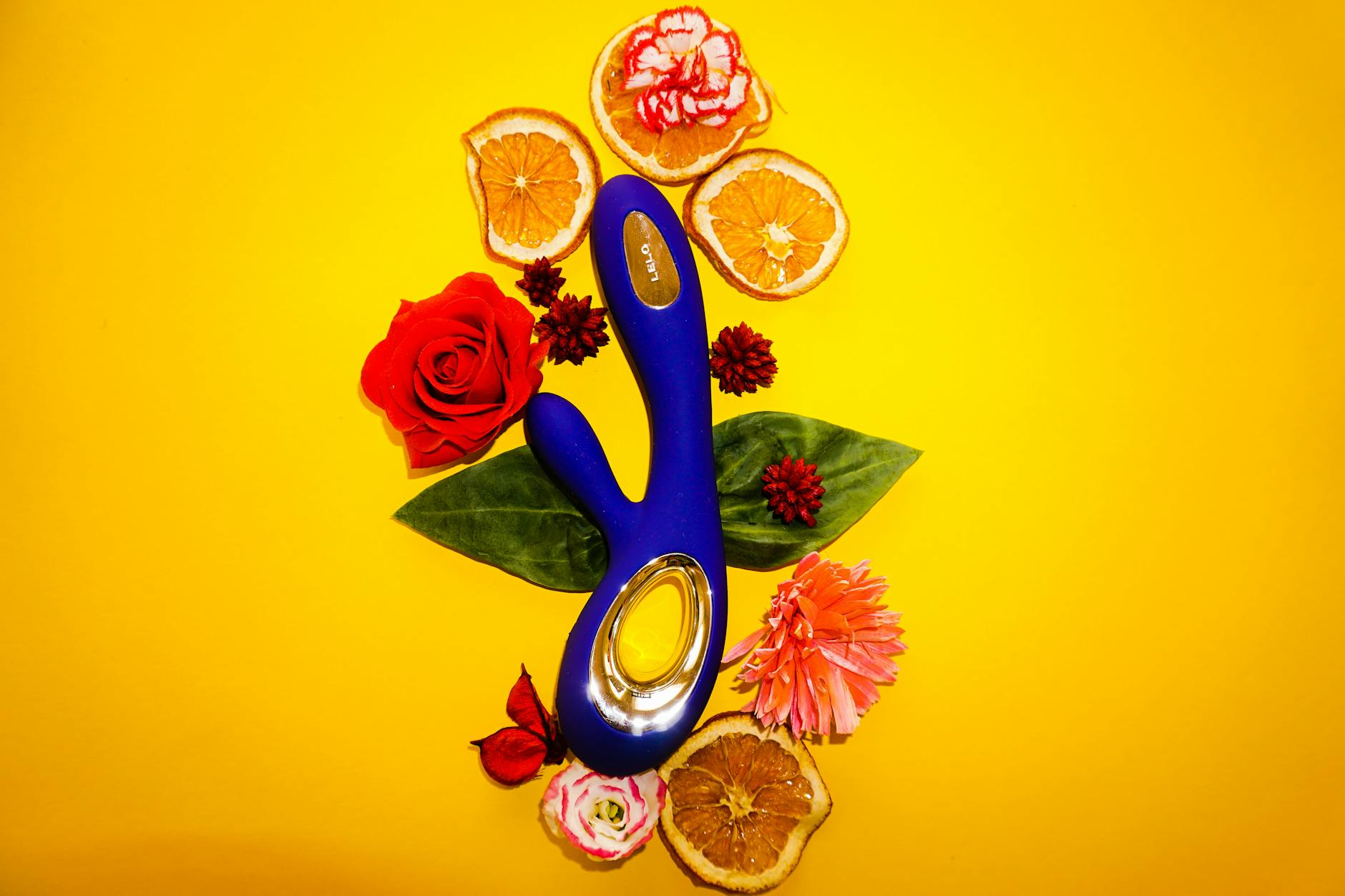
Let's start with the honest part
Coming back to pleasure after being single for years feels strange. That's not a personal failing. It's normal. Your body hasn't forgotten how to respond, but your mind has built walls around wanting anything for yourself. A lemon vibrator isn't going to dismantle those walls overnight. What it will do is give your brain permission to stop overthinking and let your body lead for once.
Here's what I've seen work for people reconnecting with solo pleasure after a long absence.
Why your body feels like unfamiliar territory
When you've spent years focused on work, family, or just surviving, your relationship with your own pleasure gets deprioritized. Guilt creeps in. The belief that wanting something for yourself is selfish. Your nervous system also gets used to operating in a contracted state, which makes arousal harder to access even when you want it.
The longer the gap, the more your brain convinces you that pleasure is something you no longer need or deserve. That's the real barrier. Not your body. Your mind.
Using a lemon clitoral vibrator helps because it bypasses some of that mental resistance. Suction-based stimulation works differently than vibration. It doesn't require the same kind of mental focus or muscle engagement. Your job isn't to achieve anything. It's just to let sensation happen.
Permission is the hardest part
I'll say this plainly: you deserve pleasure. Not because you've earned it. Not because you're in a relationship or trying to conceive or any other external reason. You deserve it because you're a person with a body that responds to touch.
But knowing that intellectually and believing it in your bones are different things. Here's what actually helps.
Start by naming the resistance. Is it guilt? Discomfort with seeming selfish? Fear that wanting pleasure means something about you? Embarrassment? Once you know what's blocking you, you can address it directly instead of white-knuckling your way through using a vibrator.
Then give yourself permission in writing. I know that sounds clinical, but it works. Write "I deserve solo pleasure" somewhere you'll see it. Your phone lock screen. A sticky note on your mirror. The actual words matter because they short-circuit the guilt voice that tries to talk you out of it.
How to actually use a lemon vibrator when you're starting fresh
First thing: don't pressure yourself to orgasm. I know that sounds counterintuitive, but the second you make orgasm the goal, you've turned pleasure into a performance metric. Your nervous system tenses up. Your brain stays in achievement mode instead of dropping into sensation.
Instead, use the first few times to get to know how the lemon feels. Wear it over your clothes. Try it on different parts of your body. Notice the pattern and intensity. The Lem has multiple settings. Start at 1 or 2, not the highest level. You're not trying to shock your system back to life. You're coaxing it.
Second: timing matters more than you think. Use a lemon vibrator when you're already in a good headspace. Not when you're stressed, angry, or emotionally depleted. Early morning after coffee, or evening when you've finished your tasks and can actually be present. Your nervous system needs to be somewhat calm for arousal to build.
Third: create a container that feels safe. That might mean locking the door, putting your phone in another room, dimming the lights. The specifics don't matter. What matters is that your brain recognizes this as time that belongs to you alone. No one's watching. No one's going to interrupt.
The reacclimation curve
Your body doesn't forget how to feel pleasure, but it does forget how to access it quickly. If you've been single for five years, expect that the first few times using a lemon vibrator, you might not feel much beyond the initial sensation. That's not a sign it's broken or you're broken. It's just deconditioning.
Keep using it without expectation. Two to three times a week, fifteen to twenty minutes each. After about three to four weeks, most people notice the arousal building faster and the sensations deepening. The more regularly you use it, the more your nervous system learns that pleasure is safe and available.
Some people find that a lemon clitoral vibrator accelerates this process compared to solo touch because the suction sensation feels novel enough to bypass some of the mental chatter. Your brain isn't comparing it to past partners or past experiences. It's just processing something new.
When partner sex is back in the picture
If you're rebuilding confidence around solo pleasure with the eventual goal of partnered sex, that's important context. Using a lemon vibrator alone isn't preparation for partner sex. It's reclaiming your own pleasure as separate from anyone else's needs or timeline.
When (if) a partner enters the picture, you'll want them to know that you've been reconnecting with your body. That you have preferences. That orgasm might take longer than they expect. That's good information. It means you know yourself better than you did before.
Some people find they want to keep using their lemon vibrator solo and also with a partner. Some find it shifts what they want. Both are completely normal. You're not obligated to share tools that feel deeply personal. You're also not obligated to keep anything private. It's your choice.
The confidence piece
Pleasure and confidence are tangled together. The more you let yourself experience pleasure without shame, the more confident you become in your own body. That confidence affects how you move through the world, not just in intimate contexts.
Using a lemon vibrator isn't frivolous or indulgent. It's a way of telling yourself that your experience matters. That what you want matters. And honestly, that's the most important thing your nervous system needs to learn right now.
Troubleshooting the common blocks
If you're using a lemon vibrator and feeling nothing, check three things: Are you in a calm enough state, or is your nervous system still wired? Are you giving yourself enough time, or stopping after five minutes? Are you placing it correctly, or pressing so hard that numbness sets in rather than sensation building?
If guilt keeps surfacing, that's something to sit with rather than push through. Guilt usually signals a belief you're carrying about what you should or shouldn't want. Those beliefs are worth examining. Consider talking to a therapist if the guilt feels heavy. There's no shame in needing support to rewire what you've internalized.
If you feel disconnected from your body during the experience, slow way down. Use lower intensities. Take breaks. Feeling disconnection is your nervous system signaling that things are moving too fast. Respect that signal. Pleasure isn't a race.
The next layer
Once you've spent a few weeks reconnecting with sensation using a lemon vibrator, you might notice other things shifting. You want to touch yourself more. You're thinking about pleasure more often. You feel more at home in your body. These are all signs that the walls are coming down.
From there, you can explore whether you want to deepen your solo practice, reconnect with partners, or simply enjoy what you've built for yourself. All of those paths are valid.
FAQ
Is it normal to feel awkward using a vibrator after years of not thinking about pleasure?
Completely normal. Your brain needs time to rewire the belief that pleasure is something you deserve. Using a lemon vibrator consistently, even when it feels mechanical at first, helps your nervous system learn that this is a safe activity. The awkwardness usually fades after three to four weeks of regular use.
How often should I use a lemon clitoral vibrator when I'm starting fresh?
Start with two to three times per week for fifteen to twenty minutes. More frequent isn't necessarily better when you're reacclimating. Consistency matters more than intensity. Your body needs time to remember how to respond without pressure.
What if I can't orgasm even after using a lemon vibrator regularly?
Orgasm isn't the only measure of pleasure. Some people spend weeks or months reconnecting with sensation before orgasm becomes accessible again. If you're consistently experiencing pleasurable feelings, you're on the right track. If you're numb throughout, that might signal depression, medication effects, or a nervous system that needs more time to settle. Talk to a healthcare provider if nothing changes after two months of regular practice.
Should I tell a partner I'm using a vibrator when I'm dating again?
That's your choice. Some people mention it early as a way of signaling they know what they want. Some introduce it gradually once trust is built. Neither is wrong. What matters is being honest if a partner asks, and not using vibrator use as a reason to avoid learning how to communicate about pleasure directly.
Can I use a lemon vibrator if I have vaginal numbness or reduced sensation?
Yes. The suction-based stimulation of a lemon clitoral vibrator actually works well for reduced sensation because it engages more nerve endings at once than focused vibration alone. Start at lower intensities and work up. If you have chronic numbness, checking with a healthcare provider helps rule out underlying causes.
What's the difference between using a lemon vibrator solo versus with a partner?
Solo use is about you learning your own pleasure without external expectations. Partner use introduces another person's timing, preferences, and response into the equation. Both matter, but they're different conversations. Solo practice first gives you a foundation of knowing what you like before you're negotiating that with someone else.
Starting where you are
Reconnecting with pleasure after years of not prioritizing it is an act of self-respect. Not self-indulgence. You're telling yourself that what you want is worth time and intention. A lemon vibrator is just a tool. The real work is giving yourself permission to enjoy what happens when you use it. That's where the shift begins.