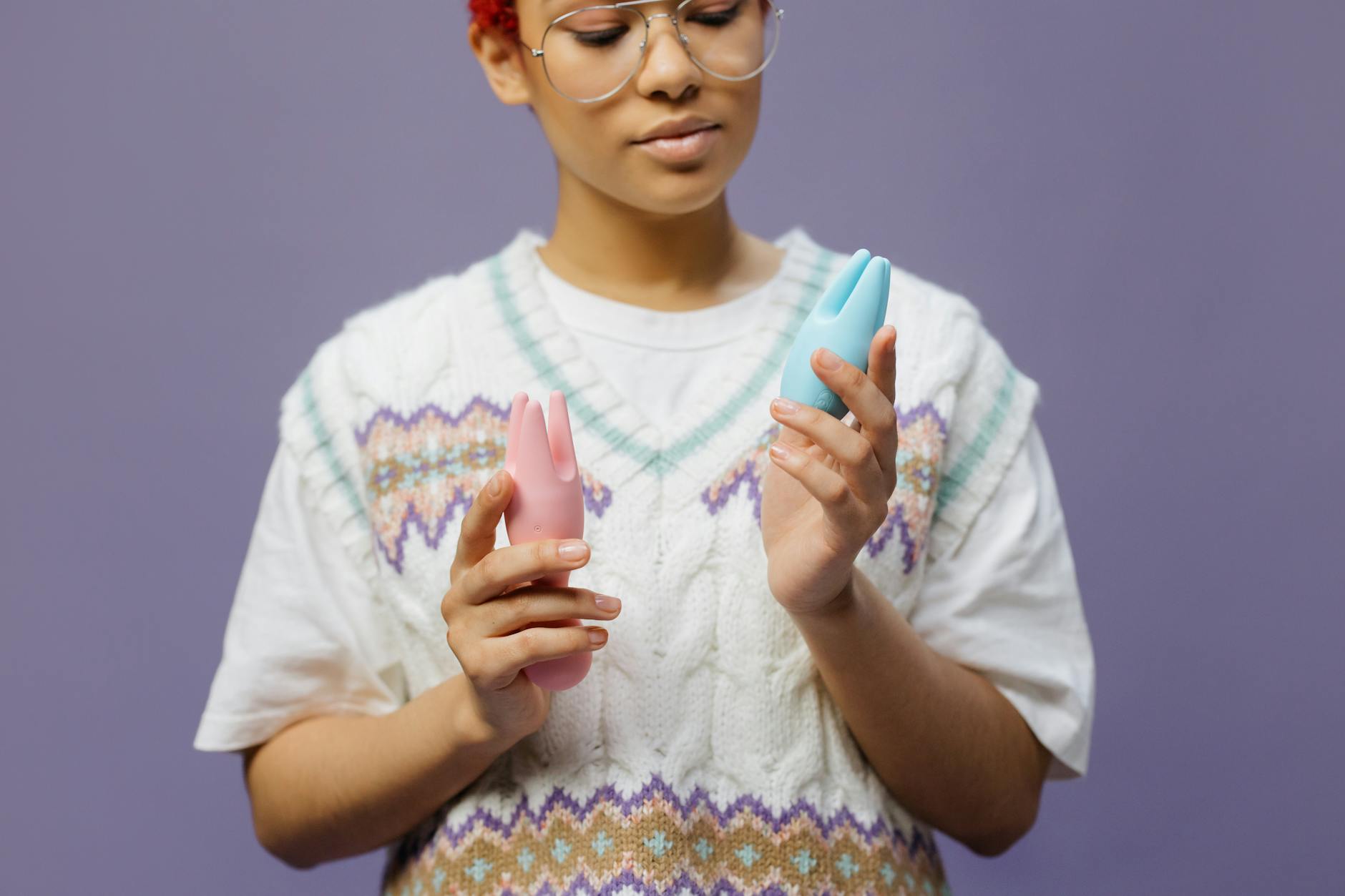
Here's the thing about mismatched sensitivity
You're not broken. Your partner isn't broken. Your nervous systems are just wired differently, and that difference feels enormous when you're trying to share one tool. One of you lights up at patterns 1 or 2 on the lemon vibrator. The other needs 4 or 5 to feel anything at all. It's frustrating, it's common, and it's absolutely solvable.
I work with couples on this all the time. The good news is that a lemon vibrator, specifically, is one of the best tools for navigating sensitivity gaps because it offers real range without compromise.

Photo by Anna Shvets on Pexels
Why sensitivity differences matter more than you think
First, let's acknowledge what's actually happening. Sensitivity isn't about loving your partner more or less. It's neurological. Nerve density varies. Arousal levels differ. Stress, medication, hormones, and past sexual experience all shape how intense stimulation needs to be before your body registers pleasure.
When you ignore these differences, one partner feels pressured to accept too much intensity (which dulls sensation and can hurt), while the other feels unseen because their actual pleasure needs aren't being met. Neither of you is wrong. You're just operating on different frequencies.
The clitoral vibrator is where this tension lives most acutely because the clitoris has wildly variable sensitivity between people. What feels transcendent to one person feels aggressive to another.
How the lemon vibrator solves (most of) this problem
The lemon sucker design is genuinely helpful here because it offers two distinct modes of stimulation without requiring your partner to switch tools or interrupt the moment.
Pattern range: Most lemon vibrators come with 7-10 patterns. The gentler patterns create a pulsing sensation rather than continuous vibration. For the more sensitive partner, this is often enough to build arousal without that overwhelming intensity.
Suction vs. vibration: This is key. A lemon vibrator uses air-suction stimulation alongside gentle vibration. Suction feels different from direct buzz. It's broader, less pinpointed, and many people with higher sensitivity thresholds find it more pleasant than a traditional vibrator because it doesn't concentrate force in one spot.
Variable contact pressure: You can adjust how hard the lemon sucker is positioned against the clitoris. Light positioning with pattern 2 feels almost meditative. Firm positioning with pattern 6 becomes quite intense. This small adjustment alone can bridge a two-level gap.
Start with a conversation, not the toy
Before you use the lemon vibrator together, you need to talk about what sensitivity actually means for each of you.
The more sensitive partner: What does "too much" feel like? Is it pain? Numbness? Overstimulation that kills arousal? Understanding whether intensity is uncomfortable or just ineffective changes your approach entirely.
The less sensitive partner: How long does arousal usually take? Are you looking for speed to orgasm, or are you seeking a specific type of sensation? Some people with lower sensitivity still orgasm easily once they warm up. Others need more specialized input.
This conversation removes shame from both sides. It shifts the frame from "one of us is broken" to "we're both normal, we're just different."
Using the lemon vibrator with mismatched partners: the practical approach
Start at the lower setting, always. Pattern 1 or 2 is the default opening move, regardless of what you think you'll need. Your body changes when you're actively engaged with a partner. What felt boring in solo play might feel perfect in the moment.
The more sensitive partner goes first. If both of you are present during the session, let the partner with lower sensation thresholds have the first turn or the primary turn with the lemon vibrator. Why? Because they need more time to build arousal, and once they're closer to orgasm, they'll be ready to explore higher intensities. The less sensitive partner will still have time and attention afterward.
Use it on yourself during partnered sex. This is the biggest unlock for couples with sensitivity gaps. Instead of your partner controlling the lemon vibrator on you, you hold it. You know your body. You know exactly what pressure and pattern work. Your partner can focus on other forms of touch, penetration, or their own pleasure. This removes the performance anxiety from both sides.
One partner uses the lemon clitoral vibrator for their own clitoral stimulation while the other provides secondary touch: kissing, inside stimulation, penetration, hand work on other areas. You're not competing for sensation. You're building layers.
Alternate, don't race. If you're both using the lemon vibrator (taking turns in a session), don't assume the less sensitive partner always needs it longer. Sometimes the more sensitive partner needs time to come down after orgasm before round two. Build flexibility into your rhythm. One person might use it for 3 minutes. The other for 7. There's no quota.
The intensity negotiation: how to compromise without resentment
Here's where couples usually get stuck: one person wants to use setting 5 because that's genuinely what feels good to them. The other person finds 5 overwhelming. So you settle on 3. But now both people are frustrated.
Instead, try this: Separate the stimulation by person. The more sensitive partner uses settings 1-3 during their turn. The less sensitive partner uses 4-6 during theirs. You're not compromising; you're customizing.
If you're building pleasure together, the partner with higher sensitivity thresholds can use the lemon vibrator at their preferred intensity while stimulating their partner with other tools or touches. You're not asking them to dial it back. You're just keeping that particular source of stimulation separate.
Communication during sex changes everything. Instead of guessing whether intensity is working, ask. "Does this feel good?" "Do you want it stronger?" "Should I stay here or try a different pattern?" It sounds clinical, but it's actually what opens pleasure. You're gathering real-time data instead of making assumptions.
When the gap is genuinely too wide
Sometimes sensitivity differences are so pronounced that even a tool like the lemon vibrator can't bridge the gap. One partner literally can't feel vibration at certain intensities, or the other partner has genuine sensitivity pain. This isn't a toy problem. It's a medical or neurological conversation.
Talk to a pelvic floor physical therapist or a sex therapist. Desensitization, numbness after medication, and vaginismus all present as sensitivity problems but need different solutions. A lemon vibrator is flexible, but it's not magic.
The emotional part (it's real)
Mismatched sensitivity often triggers feelings that aren't actually about the vibrator. "Why do they need so much intensity? Am I not enough?" or "Why can't they just handle what I like?" These questions are relationship conversations wearing a pleasure disguise.
Different sensitivity doesn't mean different desire. It doesn't mean one partner cares less or is more experienced. It's just biology. Once you stop interpreting it as rejection, you can actually use tools like the lemon vibrator to learn more about what your partner enjoys.
Photo by cottonbro studio on Pexels
Small adjustments that shift everything
You don't always need a new tool. Sometimes you just need to shift how you're using the one you have. The lemon vibrator offers plenty of room for this.
Angle matters. Positioning the lemon sucker slightly off-center rather than directly on the clitoris changes the sensation profile. It's less intense but still effective. Try it.
Timing matters. Using the lemon vibrator when you're already aroused versus cold-starting feels wildly different. Build in a 10-minute warm-up first.
Pattern variety matters. Don't assume the pattern that felt good last time is the one to use now. Your body changes. Your mood changes. Your arousal level changes. Spend 30 seconds exploring different patterns before settling on one.
Contact area matters. A lighter touch with the lemon vibrator's suction cup creates a different sensation than pressing firmly. The sensitive partner might prefer barely-there contact. The less sensitive partner might need full pressure. You can literally meet in the middle by adjusting hand pressure.
Building pleasure that works for both of you
The lemon vibrator isn't solving your sensitivity difference. It's giving you a tool that's flexible enough to accommodate it. That's the difference.
When couples figure out how to navigate mismatched sensitivity together, they often find that pleasure deepens. You're paying attention to what actually works. You're communicating. You're customizing rather than defaulting.
Your different sensitivities aren't a problem to solve. They're information about how to pleasure each other better.
Ready to explore this together? Start with the conversation. The tool follows.
People Also Ask
Can using a lemon vibrator too much make one partner numb while the other stays sensitive?
Yes, desensitization is real. Extended vibrator use (multiple sessions per week) can dull sensation, especially for the less sensitive partner who's already pushing intensity levels higher. The more sensitive partner might not experience the same dulling. If this is happening, take a 1-2 week break from vibrator use and return to manual stimulation or other tools. After the break, sensitivity often bounces back. Most couples find that using the lemon vibrator 2-3 times per week prevents this issue entirely.
What if one partner doesn't want to use the vibrator at all?
Then you have a different conversation entirely. Vibrator use isn't mandatory, and some people have genuine concerns about them. Instead of pushing the lemon vibrator, ask what they actually do want. Is it penetration? Manual touch? A different tool altogether? Not wanting to use this particular toy doesn't mean lower desire. It might just mean different preference. Respect that. Explore what both of you actually enjoy.
Should we get two lemon vibrators so we each have our own?
Maybe. If you're using them simultaneously, yes, a second vibrator means you can both customize intensity without negotiating. But many couples find that taking turns with one works fine and actually deepens attention to each partner. Start with one. If you're consistently frustrated passing it back and forth, upgrade to two.
Is it normal to want different intensities at different times?
Completely normal. Arousal fluctuates. Stress levels change. Hormones shift. You might crave intensity one day and tenderness the next. This isn't inconsistency. It's your body responding to different contexts. A good lemon vibrator accommodates this range without requiring you to switch tools.
How do we talk about sensitivity without it feeling like criticism?
Frame it as curiosity, not complaint. "I noticed you prefer gentler settings. Show me what feels good to you" sounds inviting. "Why do you always need it so strong?" sounds judgmental. The lemon vibrator is a tool for exploration. Use language that reflects that. You're learning about each other, not diagnosing problems.
What if the sensitive difference means one partner rarely orgasms during partnered sex?
Then you have a separate issue that probably needs a sex therapist. Orgasm gaps happen for many reasons: arousal pace, stimulation type, performance anxiety, medication side effects. The lemon vibrator helps, but it's not a cure-all. If one partner consistently struggles to orgasm during partnered sex, explore that specifically. You might find it's not about the toy at all.
How we can help
Navigating pleasure differences with a partner takes honesty and experimentation. If sensitivity gaps are creating friction in your relationship, it might help to talk through it with someone trained in couples work. Contact Hello Nancy if you'd like guidance on communication or product recommendations tailored to your specific situation.
Your differences aren't a limitation. They're an invitation to know each other more deeply.