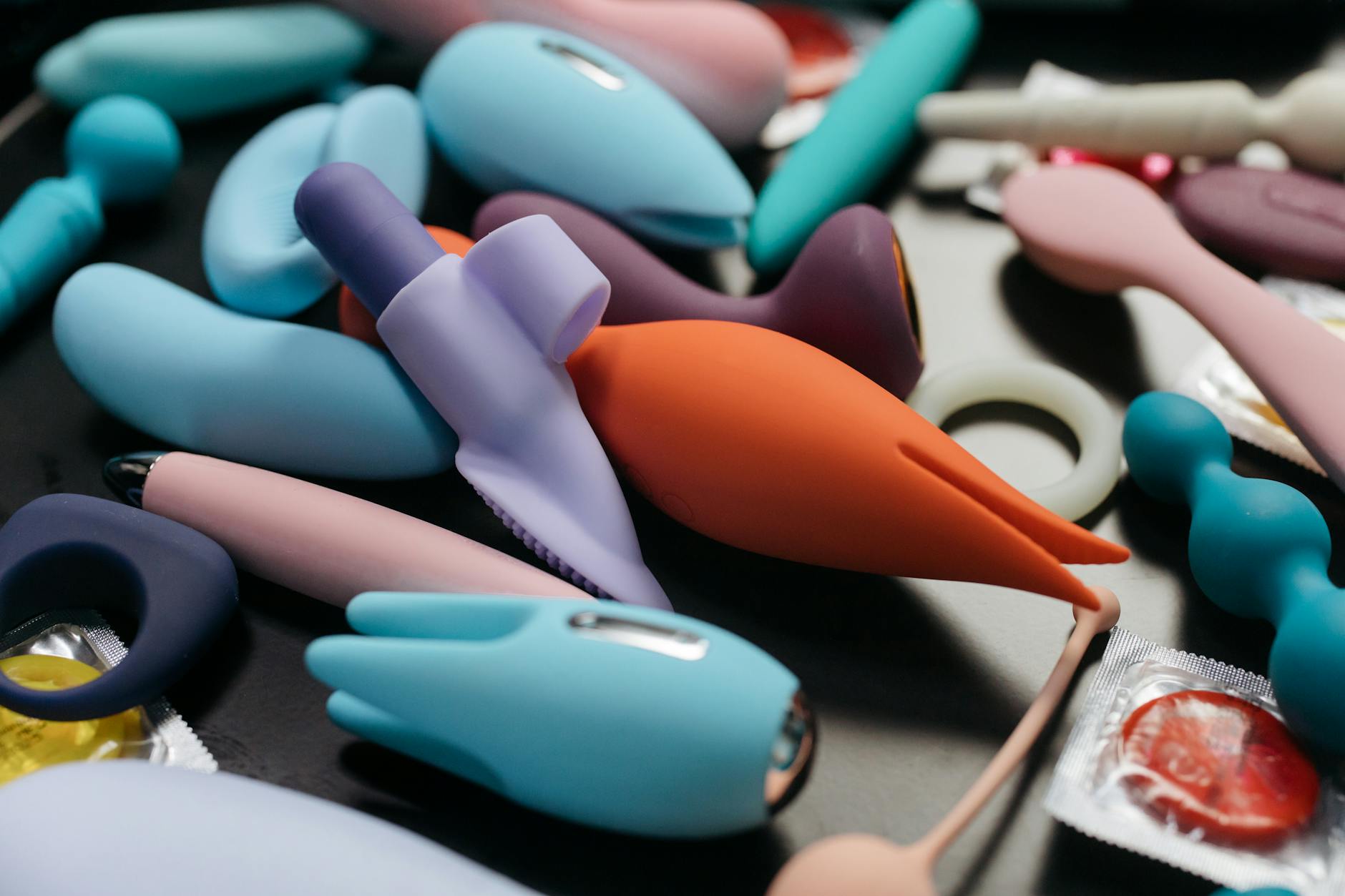
Why couples are rethinking vibrators together
Let's be real: vibrators used to feel like something one person brought to bed when the other wasn't quite doing it right. Awkward. Loaded. A quiet negotiation about whose pleasure counted. That narrative is dead, and lemon vibrators are part of why.
The shift happened because lemon clitoral vibrators are fundamentally different tools. They're not a solo act masquerading as partnered play. They're designed for integration, communication, and shared focus. And that changes everything.
How lemon vibrators change the dynamic between partners
When I work with couples in my practice, the conversation usually starts with worry: "Will they feel left out? Will it make things weird?" What I see over and over is the opposite. Lemon vibrators, specifically, tend to become a focal point of attention and connection rather than a replacement for it.
Here's the mechanics: air-suction vibrators like the Hello Nancy lemon toys don't require the kind of focused, stationary contact that older vibrators demand. They work with movement, rhythm, and partnered touch. A partner can use the vibrator while maintaining eye contact, kissing, or other forms of contact. It becomes a shared tool instead of an either-or situation.
The other piece is communication. Introducing a lemon vibrator into partnered sex forces the conversation you should've been having anyway: What do you actually like? What feels good? Where does it feel good? Those questions, once answered, matter far more than the vibrator itself.
The design advantage: why air-suction beats traditional vibration for couples
Most vibrators work through sustained vibration against the skin. That's fine for solo play, but in partnered sex, it creates logistical constraints. The receiving partner has to stay still. The giving partner loses mobility. It becomes a static, isolated experience.
Lemon vibrators use air-suction stimulation, which works differently. The sensation comes from gentle pressure and release cycles rather than constant vibration. This means a partner can move with you, change angles, add other forms of touch. The vibrator becomes one layer of sensation instead of the only sensation.
For couples specifically, this matters because sex isn't just about stimulation. It's about rhythm, presence, and the ability to respond to each other in real time. Air-suction technology allows both partners to maintain agency and responsiveness throughout.
Why positioning is easier (and why that actually matters)
With traditional vibrators, positioning can be a puzzle. Where does it go? How does a partner hold it while still being able to touch you? Do you hold it yourself, which takes them out of the action? These logistics sound minor until you're in the moment and suddenly everything feels transactional.
Lemon vibrators are lightweight and ergonomic, which means a partner can hold one comfortably with one hand while touching you with the other. Or you can use it on yourself while they do something else. The tool doesn't dictate the choreography; it supports it.
Better positioning also means less friction and discomfort. If you're using a toy that's awkwardly shaped or heavy, tension creeps in. The whole experience becomes about managing the tool instead of enjoying it. Lemon vibrators are small enough that they disappear into the experience rather than dominating it.
The pleasure paradox: why adding a tool doesn't subtract from connection
There's an old myth that vibrators create distance. If I'm using a toy, my partner must be less important to me. If we need a vibrator, our connection isn't strong enough. That logic doesn't hold up under scrutiny, but it lingers anyway.
What I see clinically is almost the opposite. Couples who integrate a lemon vibrator report feeling more connected, more in conversation, more focused on each other's pleasure. The vibrator becomes a shared object of attention. It's something you're doing together, not something one person is doing while the other watches.
This is especially true for couples navigating changes in their bodies or responses. If someone's clitoris is less responsive, or arousal takes longer, or orgasm feels different than it used to, introducing a lemon vibrator can actually restore a sense of ease and playfulness. You're experimenting together. You're problem-solving as a team. That builds intimacy in ways that struggling silently never will.
Communication shifts: the hidden benefit of lemon vibrators
Introducing any new tool into partnered sex requires conversation. Before, during, and after. What would you like to try? Does this feel good? Should we adjust? Want to try a different pattern?
Those conversations, multiplied across a few intimate encounters, rewire how couples talk about pleasure. Instead of assuming you know what your partner wants, you have to ask. Instead of hoping things work out, you're actively problem-solving. Instead of treating pleasure as a private, unspoken thing, you're making it collaborative.
I've worked with couples who said that introducing a lemon vibrator was the first time they'd ever really discussed what they each wanted in bed. That's not about the vibrator. That's about permission. The tool gave them permission to have the conversation that should've happened years earlier.
Timing and rhythm: why lemon vibrators sync with partnered sex
One reason traditional vibrators can feel isolating is that they set their own pace. You press a button, it vibrates at that speed, and you have to sync your movement to the machine. With a partner, you're trying to maintain two rhythms at once: theirs and the vibrator's.
Lemon vibrators have multiple patterns and intensities, which means you can adjust to the moment. Starting slow, building speed, then pulling back. A partner can feel when you're close and adjust accordingly. There's a dance happening, and everyone's moving to the same music.
For couples especially, this rhythm piece is huge. Sex between partners is about matching energy, responding to cues, building together. A rigid vibration pattern works against that. A flexible tool that adapts to real-time feedback supports it.
When lemon vibrators actually strengthen long-term relationships
I want to be specific about this because it matters: introducing a vibrator to your partnered sex life doesn't fix a broken relationship. A tool can't do emotional work. But it can, in a stable, communicative partnership, add dimension to physical intimacy that might have gone flat.
Many couples hit a point where physical intimacy becomes routine. You know each other's bodies, you know what usually works, and you stop paying attention. It becomes almost habitual. A lemon vibrator can shake that pattern up precisely because it's new and requires attention. Suddenly you're experimenting again. You're noticing each other's responses again. You're curious again.
For couples in their 40s and 50s especially, that curiosity matters. Bodies change. Responses shift. What worked at 25 might not work at 45. Rather than mourning that loss, a lemon vibrator can be an invitation to explore what does work now. That's regenerative.
Building comfort: how to introduce a lemon vibrator to your partner
The introduction matters. You don't walk in with a vibrator and hand it over. That usually lands as an accusation: "You're not getting me off." Instead, frame it as exploration.
"I want to try something new." "I've been reading about this." "I'm curious if this would feel good to us." Partner in the discovery. Show them what air-suction is about. Let them hold it. Let them experiment on themselves first if they want. Make it a shared project, not a surprise.
Many partners actually enjoy holding and controlling a lemon vibrator during partnered sex. It gives them an active role in creating your pleasure. That can feel very intimate and empowering. Don't assume they'll feel threatened. Often, the opposite happens.
FAQ
Will my partner think I'm not satisfied with them if I introduce a lemon vibrator?
Not if you frame it as exploration rather than critique. What partners usually feel is relief. So often, they've been trying to do something they can't do, and they didn't know how to talk about it. A vibrator can take pressure off both of you. You're not failing at being the perfect lover. You're being realistic about what bodies do and don't do naturally, and you're solving for it together.
Can both partners use a lemon vibrator during sex?
Absolutely. Some couples take turns. Some use multiple vibrators at once. Some have a partner control the vibrator on the receiving partner while they focus on other forms of touch. The ergonomic design of lemon vibrators makes this possible in ways that bulkier toys don't allow.
What if my partner is uncomfortable with the idea of vibrators?
Start with education, not the tool itself. Explain the mechanics. Share what you've read. Make it clinical and practical rather than sexy or intimidating. Many objections fade when you remove the shame or secrecy. If it stays uncomfortable, that's a separate conversation about what's driving that discomfort. That conversation belongs in couples therapy, not in bed.
Is a lemon vibrator better than other vibrators for partnered use?
For most couples, yes. The air-suction design works with movement rather than against it. The smaller size means easier positioning. The pattern flexibility allows for real-time adjustment. And the ethical design of Hello Nancy products means you're investing in something built with couples' pleasure in mind. That matters.
Can we use a lemon vibrator if we're just exploring or new to toys?
Yes. Lemon vibrators are actually ideal for couples who are new to toys together. The sensation feels different from traditional vibrators, which can be less intimidating. Start on the lowest setting, talk about what you're experiencing, and adjust. There's no rush and no "right" way to do this.
How do we keep things feeling intimate if we're using a toy?
Stay present with each other. Maintain eye contact. Keep kissing and touching. The vibrator is a tool, not a substitute for your partner. If you're treating it as a replacement for connection, that's the problem. If you're using it as one element of a larger intimate experience, it deepens things.
The actual impact: what couples report
I've seen couples in their 20s, 40s, and 60s all benefit from this shift. What's consistent is that the conversations matter more than the tool. Once you've opened up the dialogue about pleasure, once you've given each other permission to ask for what you want and experiment without shame, the specific toy becomes almost secondary.
But lemon vibrators, designed specifically to work well in partnered contexts, make that conversation easier to start and easier to sustain. They're built for two people in mind, not one. And that shows in how they perform, how they feel, and what they make possible for couples willing to explore together.
Your pleasure as a couple matters. Your conversation about pleasure matters. And the right tools, used with intention and openness, can help you both show up more fully to that shared experience.
Ready to explore what works for your relationship? That conversation starts with honesty, not with a specific product. But when you're ready to experiment, knowing that tools like lemon clitoral vibrators are designed with couples in mind can help you move forward with confidence.
If you have questions about how to introduce this to your relationship or how to navigate the conversations that come with it, I'm here to help. Reach out at /contact and let's talk through what might work for you both.