Let's talk about what grief does to your body
Grief doesn't just mess with your head. It colonizes your nervous system. Your libido tanks. Touch feels wrong. Sex feels impossible. And the longer it goes on, the more you might wonder if you and your partner will ever feel that pull toward each other again.
Here's what's happening physiologically. Grief triggers sustained cortisol release. Your body stays in threat mode. The parasympathetic nervous system (the one that handles arousal, relaxation, pleasure) gets shoved to the background. Meanwhile, your brain is running damage-control protocols that frankly don't leave a lot of bandwidth for desire.
That's not a personal failure. That's your body doing exactly what it's supposed to do.
The gap between needing connection and being able to access it
Most grieving couples describe the same contradiction. You want to feel close to your partner. You know sex might help. And yet the idea of being touched, of performing, of generating enthusiasm or orgasms on a timeline, feels like being asked to run a marathon while your legs are broken.
So you don't have sex. Weeks pass. Then months. And now there's a second problem layered on top of the grief: the shame and distance that comes from physical disconnection. You start wondering if the spark is gone. If maybe the loss broke something that can't be fixed.
It can be fixed. But it rarely happens through willpower or scheduling date nights. It happens through removing friction and rebuilding permission.
Why gentleness becomes the entry point
When you're grieving, aggressive stimulation reads as invasive. Fast rhythms feel chaotic. Anything that demands you perform or keep up triggers that threat-response again. What works instead is the opposite: tools and approaches that let you receive pleasure without having to generate it, that don't require performance, that can be used solo or together without awkwardness.
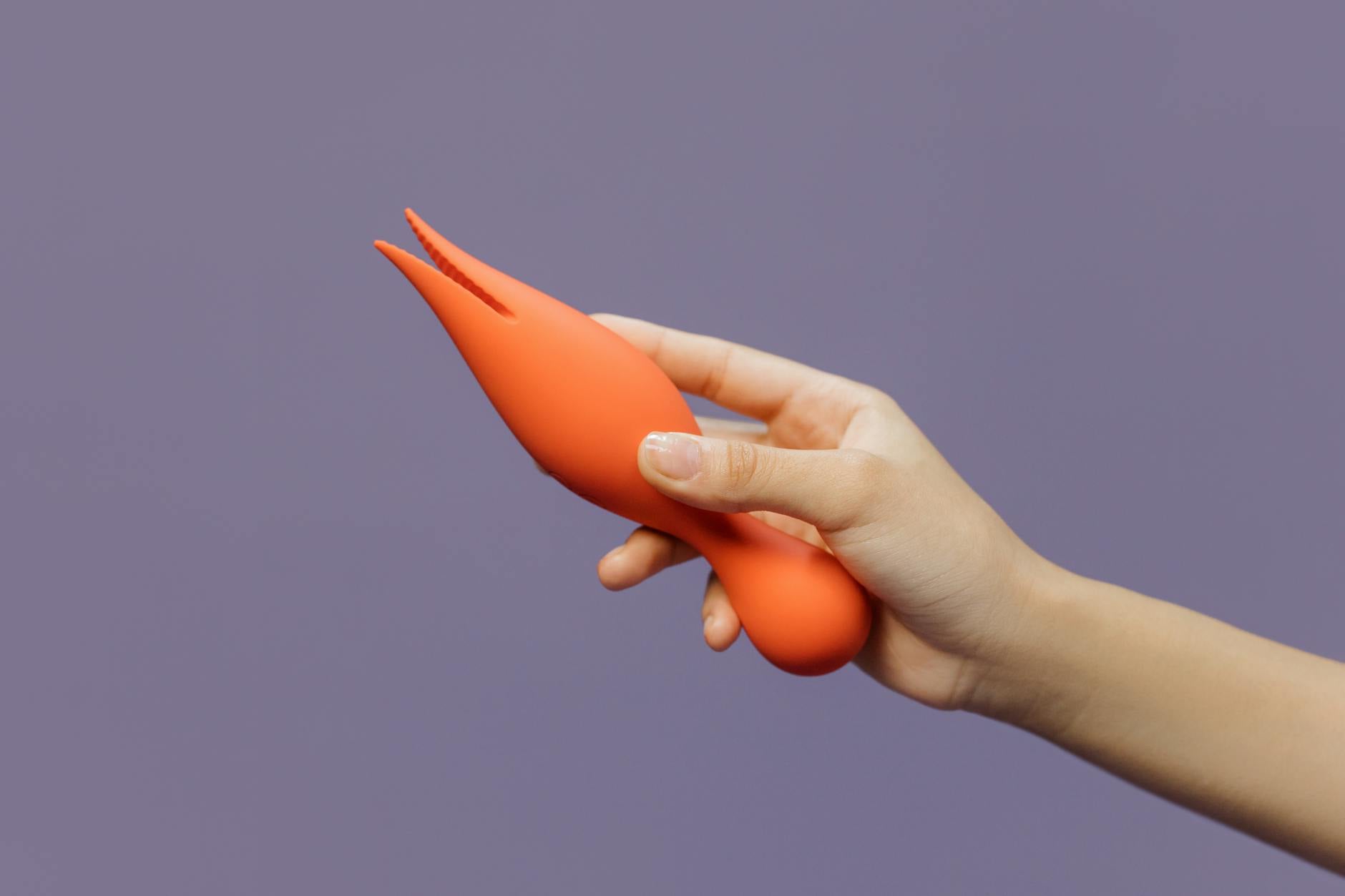
This is where a clitoral vibrator like the Lem becomes genuinely useful. Not as a novelty. As a gentle reentry point.
The Lem uses suction and gentle pulsing rather than hard vibration. This matters when you're grieving because the sensation feels softer, less demanding. It doesn't require you to build arousal from nothing. It meets you where you are. Many people find that suction feels less clinical and more intuitive than traditional vibrators. Your partner can use it on you, or you can use it on yourself, and either way there's zero expectation baked in.
The conversation you need to have first
Here's what I tell couples in my practice. Before you bring any tool into the bedroom, you need a separate conversation that happens fully clothed, not at night, not in bed. The conversation is simple: "I want us to reconnect physically. I don't know what that looks like yet. And I need to know you're not waiting for me to be 'normal' again."
Your partner probably needs to hear that explicitly. They're grieving too. They might be holding themselves back because they think you're fragile. They might assume desire will come back on its own, and any initiation feels presumptuous.
Once you've said it out loud, the tools become less loaded. A lemon clitoral vibrator isn't a sign that something is broken. It's a signpost saying "I want us here, together, at this pace."
How to actually start: three stages
Stage one: Solo exploration. Use the toy alone, no pressure, no timeline. The goal is to remember what pleasure feels like in your own body. Not to achieve an orgasm. Just to reconnect with sensation. This might take weeks. That's normal.
Stage two: Your partner is present but not doing anything. They're in the room. Maybe you're holding hands. Maybe they're just nearby. The point is you're not hiding. You're normalizing the presence of your partner while you do this thing that once felt shameful or risky.
Stage three: They participate. Your partner holds the toy. You guide. The pressure is off both of you because you've already broken the silence. There's no expectation of orgasm or performance. You're just moving toward each other.
This progression might take months. It should. You're rebuilding trust in your own body and your partner's attention at the same time.
Why lemon vibrators work better than the alternatives when you're in this headspace
Fortunately or unfortunately, how lemon vibrators help when your body responds differently to touch overlaps almost completely with what grieving people need. Suction-based stimulation doesn't require the same arousal threshold as penetrative sex. It's localized. It doesn't demand full-body participation. You can stay clothed if you need to. You can stop anytime without awkwardness.
Compare this to traditional vibration, which can feel overwhelming on an already-flooded nervous system, or to the expectation of partnered sex, which carries decades of learned rhythm and performance. Lemon sexual toys like the Lem are designed for people who need stimulation that meets them gently, which is almost everyone who's grieving.
The role of routine without pressure
Once you're in stage two or three, I recommend what I call "low-stakes intimacy time." Pick a night, maybe Friday. Same time every week, but if it doesn't happen, it doesn't happen. No guilt. No rescheduling. No apologies.
During that time, you're together. You might use the toy. You might just be in each other's presence and do nothing. You might talk. The point is consistency, not intensity. Your nervous system needs to learn that touch is safe again, and that happens through repetition, not through emotional breakthroughs.
Many couples find that by week four or five of this routine, desire starts to reappear. Not because they're "over it." Not because the grief is gone. But because they've created a small, protected space where pleasure is possible even while pain is still true.
When you need actual professional support
If it's been more than six months and desire hasn't budged, or if sex feels painful rather than numb, talk to a grief-specialized therapist. Not a sex therapist, not a couples counselor (though those help). A grief specialist who understands that sexual shutdown is one of many ways the body processes loss.
Similarly, if one partner is grieving and the other isn't, or if you're grieving different losses at different speeds, that creates a specific dynamic that tools alone won't fix. How to use a lemon vibrator when partners have different orgasm preferences touches on mismatched timelines, but grief mismatches are their own thing. That's worth professional navigation.
The harder truth about rebuilding after loss
Honestly, reconnecting sexually after grief isn't about the tool. It's about both of you deciding that pleasure and connection still matter, even in loss. Even when it feels selfish. Even when your body is numb.
Grief is stubborn. So is desire. But couples who move through this tend to describe sex afterward as more tender, less performance-based, more about presence. You've had to go back to basics. You've had to ask for what you need instead of assuming. You've had to move slowly. And somehow, on the other side, that feels like an upgrade.
The Lem or any Hello Nancy's Lemons lemon adult toy is just the vehicle. The real work is the decision to show up for each other anyway.
Common questions about intimacy rebuilding and grief
Is it normal to feel nothing even when stimulated after a loss?
Completely normal. Grief creates anhedonia, which is a clinical term for "pleasure feels muted." Your brain is literally less able to register reward signals. This isn't permanent. It usually shifts between three and six months, sometimes longer. Using a tool gently during this phase isn't about forcing pleasure. It's about creating neural pathways that remind your body sensation still exists.
Can we use lemon clitoral vibrators together if we're at different stages of grief?
Yes, but carefully. The partner who's further along in grieving might need to go slower than feels natural to them. The partner who's stuck might need permission to prioritize their own healing. The toy becomes a way to be intimate without requiring perfect synchrony. One of you might receive while the other holds space. That's still connection.
What if sex feels triggering or overwhelming even with a gentle toy?
Then the toy isn't the right entry point yet. Sometimes the body needs more time before any stimulation feels safe. A grief specialist can help you identify if this is neurological numbness or trauma-responsive avoidance. Those require different approaches.
Will my desire come back if I use lemon vibrators regularly?
Often yes, but not because the toy is magic. Because consistency, gentleness, and permission slowly reset your nervous system. The toy just makes it easier to create that consistent, gentle space. Add a partner who's patient and you've got a real foundation.
How do I introduce the idea without it feeling like pressure?
Don't lead with the toy. Lead with the conversation. "I miss feeling close to you and I'm struggling with how to get there. I found something that might help, no pressure, and I wanted to see if you'd be open to exploring it together." That's it. If they say no, that's information about where they are in their grief. Respect it. Revisit in a few weeks.
What if my partner thinks using a toy means I don't want them anymore?
This deserves its own conversation, separate from the intimacy exploration. "This isn't about you. It's about my body needing a bridge back to sensation. I want you in this." If they can't hear that, couples therapy isn't optional. Grief is hard. Mismatched sexual needs during grief is harder. Professional help matters.
The path forward
Grief disrupts desire. That's not a failure of your relationship or your body. It's what grief does. But it doesn't have to be permanent. Reconnection happens slowly, gently, with patience and the right tools. Hello Nancy's Lemons lemon vibrators are designed for exactly this kind of tender reentry.
Start with the conversation. Move at your own pace. Use whatever helps. And give yourself permission to heal in your own timeline, as a couple and as individuals.
If you're struggling with where to start, reach out. That's what we're here for.