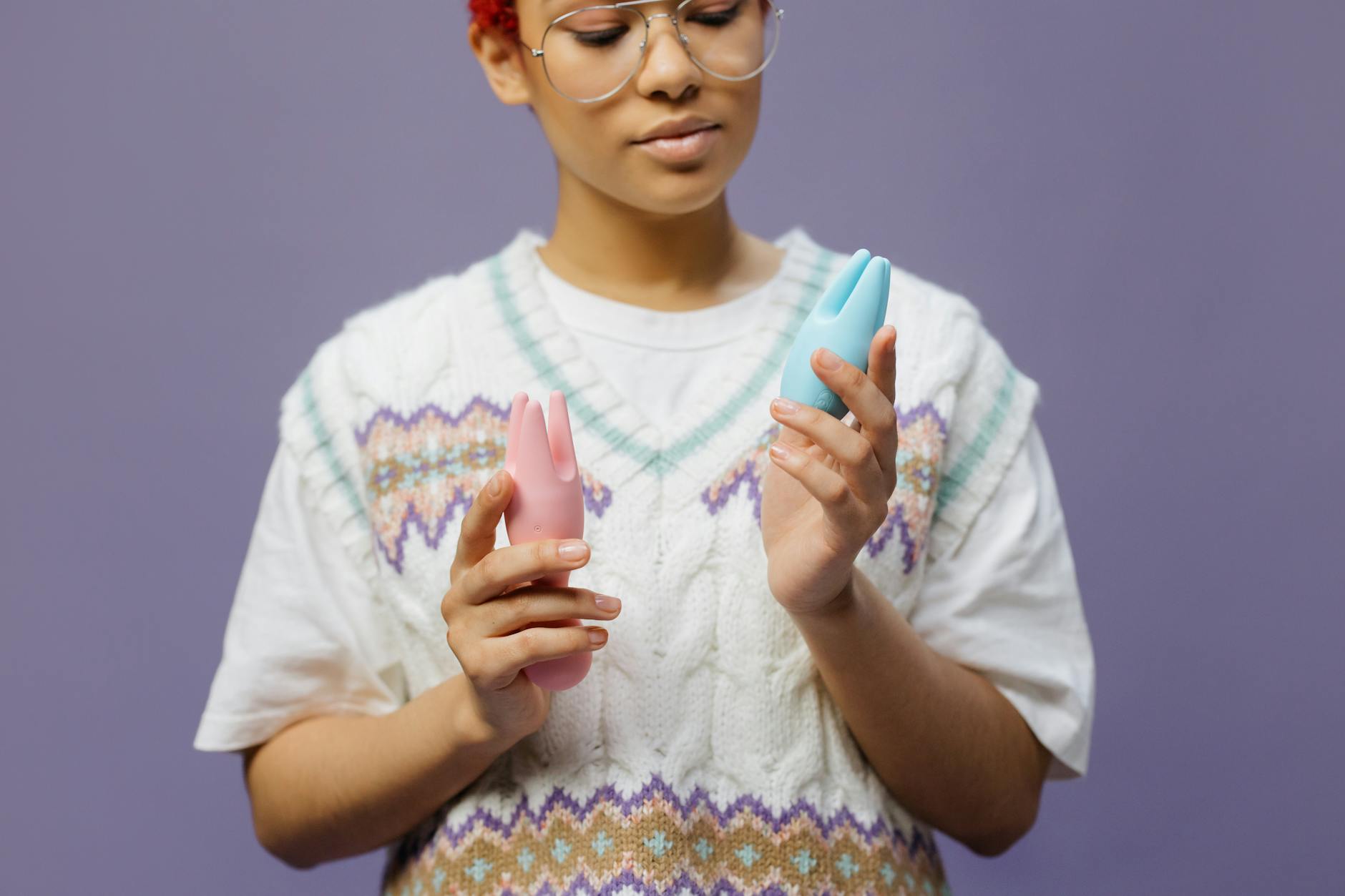
Let's talk about what thick tissue actually means
Honestly, thick vaginal tissue is not a problem. It's just different. And "different" doesn't mean less sensation or less pleasure. It means the same pressure that feels amazing on thin tissue might feel blunt, uncomfortable, or even numb on thicker tissue. That's not a flaw in your body. That's just anatomy, and it changes how you approach a lemon clitoral vibrator.
Thick vaginal tissue is common. It can show up from genetics, hormonal changes, age, scar tissue, or even just how your body built itself. The key thing to know: you don't need a different toy. You need a different approach with the one you have.
Why standard vibration patterns might feel different
Thick tissue has more layers between the vibration source and the sensitive nerve endings. Think of it like the difference between tapping a table and tapping through a pillow. The signal gets muffled.
With a standard clitoral vibrator like the Lem, patterns that work beautifully on thin tissue can feel either too shallow or too intense on thick tissue. Shallow because the vibration doesn't travel deep enough. Intense because your body compensates by pressing harder, which can lead to numbness after 10-15 minutes.
The pressure mechanism is worth understanding. With thick tissue, you need sustained pressure to communicate with the nerves underneath, not just rapid vibration on the surface.
The pressure and pattern strategy
Here's what I recommend to clients with thick tissue:
Start with medium to firm pressure. Press the Lem firmly against your clitoris, not lightly. Light pressure bounces off. Firm pressure sinks through the tissue layers. You're looking for steady contact, not a hover.
Use lower frequency patterns. The Lem's patterns 1 through 3 are gentler and have longer wavelengths. These travel through thick tissue better than the faster patterns 5-8. Start with pattern 1 or 2 for 3-5 minutes, then experiment upward if you want more intensity.
Take movement breaks. After 10-15 minutes of continuous contact, move the vibrator away for 2-3 minutes. This resets your nerve sensitivity and prevents the numb, fatigued feeling that happens when receptors get overstimulated in the same spot.
Angle matters more than you think. Thick tissue responds better to consistent angling. Instead of moving side to side, try tilting the vibrator slightly in one direction and holding steady pressure. The Lem's flat top allows for this kind of precise angle control.
Lubrication makes a measurable difference
With thick tissue, lubrication does two things: it reduces friction on the surface (which matters even though you're not worrying about dryness) and it helps transmission of vibration through tissue layers.
Use a water-based lubricant generously. Not a dab. Enough that you can feel the Lem moving slightly over the slick surface, not grinding. The lube acts like a conductor, helping the vibration travel more efficiently to the nerve endings beneath.
Reapply lube every 10-15 minutes if you're going longer. Thick tissue benefits from consistent lubrication more than thinner tissue does because you're relying on fluid to help transmit sensation.
Warm-up time changes everything
Thick tissue takes longer to become fully aroused and engorged. The tissues need time to fill with blood and soften slightly, which improves nerve sensitivity.
Spend at least 10-15 minutes on foreplay or self-touch before you bring the Lem into play. This isn't extra time. This is foundation time. When you start with the vibrator on warm, receptive tissue, the difference in sensation is dramatic.
Your partner (if you have one) should know this too. A rushed transition straight to the vibrator skips the step that actually makes vibration work better for your body.
When to check in with a healthcare provider
Sometimes thick tissue comes with reduced sensation, which can feel frustrating. But reduced sensation isn't permanent, and it's often treatable.
If you notice numbness, persistent soreness, or pain during any stimulation, chat with your gynecologist. A few conditions present this way. Vulvodynia, cysts, or hormonal changes can all create thick tissue plus sensation changes. None of these mean you can't use a lemon vibrator. They just mean you might need some support adjusting the approach.
Pairing the right lemon vibrator settings
Best Lemon Vibrator Settings for Different Body Types and Sensitivities walks through this in detail, but here's the quick version for thick tissue.
The Lem has eight patterns. For thick tissue, patterns 1, 2, and 3 are your sweet spot. These are rhythmic and sustained, not chaotic. They allow pressure to build and travel. Patterns 5-8 move too fast and create surface-level stimulation that registers as noise instead of pleasure.
Increase intensity slowly. If pattern 2 feels good, don't jump to pattern 5. Try pattern 3 for a few sessions first. Your body will tell you what thickness of tissue responds to. Listen.
Solo play versus partnered play
Thick tissue behaves slightly differently depending on whether you're alone or with a partner.
Solo, you control pressure and angle completely. You can hold steady pressure on a Lem for as long as you need without your arm getting tired (the device is light). This is your advantage. Use it. Long, steady pressure is what thick tissue responds to.
With a partner, they might naturally go lighter or faster because they're trying to read your face for pleasure signals. Have a direct conversation. "Firm pressure, slow patterns, and long contact work better for my body" is way more useful than hoping they figure it out. If they're using the Lem with you, How to Use a Lemon Vibrator During Foreplay With Your Partner has strategies for communication that actually work.
The numbness problem and how to avoid it
Thick tissue is more prone to vibration desensitization because nerve receptors fatigue faster when they're working harder to feel the signal through extra tissue layers.
Prevention is simpler than recovery. Move the vibrator every 10-15 minutes. Change patterns every 5 minutes. Give your tissue 2-3 minute breaks between sessions. And genuinely, limit sessions to 20-30 minutes when you're starting out. Your body will build tolerance over time.
If numbness has already happened, How to Regain Sensation When Your Lemon Vibrator Feels Numb goes deep into recovery protocols.
Why this matters for long-term pleasure
The reason I'm so specific about this is because pleasure should feel good in the moment and afterward, not leave you sore, numb, or frustrated.
Thick tissue is not a limitation. It's information. Your body is telling you exactly what kind of contact works. When you listen to that information instead of forcing a generic approach, everything changes. Pleasure becomes accessible, consistent, and genuinely satisfying.
You deserve an approach that works for your actual body, not someone else's body.
Frequently asked questions
Can thick tissue become thinner over time?
Yes, in some cases. Estrogen, consistent sexual stimulation, and improved pelvic floor function can all contribute to tissue that feels slightly thinner and more responsive. But this takes months, not weeks. In the meantime, adapt your technique to the tissue you have now, not the tissue you hope to have later.
Is thick tissue a sign of a health problem?
Not necessarily. Some people are genetically built with thicker vaginal tissue. That's completely normal. Thick tissue can also result from scarring, hormonal changes, or conditions like lichen sclerosus. If thickness came on suddenly or is accompanied by pain, itching, or unusual discharge, see a gynecologist. Otherwise, it's just your body's anatomy.
Will a stronger vibrator like the Lem work better than a weaker one?
Not automatically. A stronger vibration on thick tissue can feel overwhelming or numb-inducing even faster than a gentler vibration. The Lem is actually well-designed for thick tissue because its pressure can be modulated and its patterns are programmable. What matters is technique: firm pressure, lower frequencies, and movement breaks.
Should I avoid using a lemon clitoral vibrator if I have thick tissue?
Absolutely not. Thick tissue absolutely can use and enjoy clitoral vibrators. You just need to adjust how you use it. Firm pressure, extended warm-up, lower patterns, and consistent lubrication make all the difference. The Lem's design actually suits thick tissue well because the flat surface allows for sustained pressure.
Does lube need to be a specific type for thick tissue?
Water-based lube works best because it won't degrade the Lem (which is silicone) and it mimics the body's own fluid. Silicone-based lubes feel richer but can damage the toy over time. Oil-based lubes can trap bacteria. Stick to water-based and apply generously.
How long does it take to find the right approach with thick tissue?
Most people find a comfortable rhythm within 2-3 sessions once they know what to look for. The first session is learning. By session three, you know your pressure preference, your favorite patterns, and your ideal warm-up time. That's when it becomes genuinely pleasurable.
The takeaway
Thick vaginal tissue changes the path vibration takes to reach pleasure. It doesn't block it. When you adjust for firm pressure, lower frequencies, generous lubrication, and movement breaks, you're not working around your body. You're working with it.
The lemon clitoral vibrator is adaptable enough to work beautifully with thick tissue. You just need the right information to make it happen. And now you have it.